Are you ready to swap salmon for sprats and sardines?
By: Communications
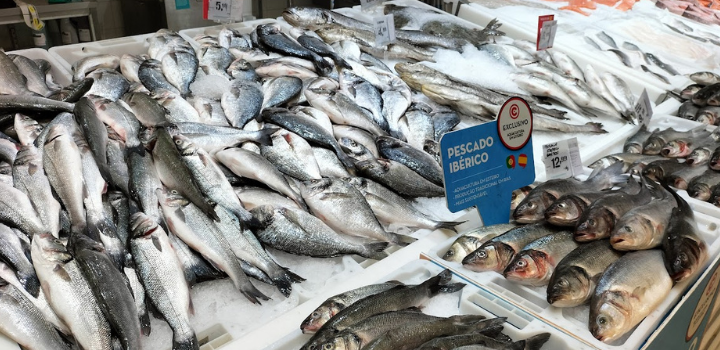
Millions of Britons could be ready to swap imported fish for home caught favourites like sardines, sprats and anchovies – according to a new study from the University of East Anglia (UEA).
A new report reveals that more than 40 per cent of consumers are willing to experiment with fish they’ve never tried before.
The study suggests the UK is overlooking a major opportunity to improve national health and bolster local economies by embracing its own rich stocks of small, nutritious fish.
Local seafood
The study was led by researchers at UEA’s Centre for Social and Economic Research on the Global Environment (CSERGE).
They say that now is the perfect time for Britain to rediscover its local seafood.
Lead researcher Dr Silvia Ferrini, from the School of Environmental Sciences, said: “Despite an abundance of fish species in British waters, more than 80 per cent of the seafood we eat here in the UK is imported.
“And much of the fish caught in local seas - including Cornish sardines and anchovies - is exported, instead of ending up on British dinner tables.
“This imbalance drives up carbon emissions, leaves the UK vulnerable to global supply chains, and pushes shoppers towards the same narrow selection of cod, haddock, salmon, tuna and prawns.
“Sardines and anchovies were once staples of traditional coastal diets but nowadays, many British consumers have never tried them.
“Concerns about taste and bones often stand in the way.
“But our research shows that curiosity is strong, with nearly half of UK consumers saying they would be willing to try these lesser known species - especially if they are fresh, locally sourced and reasonably priced.”
How the research happened
Researchers at UEA combined two focus groups, a national consumer survey, supermarket sales analysis and UK Living Costs and Food Survey (LCFS) datasets to understand buying behaviour and attitudes towards trying new fish.
Key findings:
• 84 per cent of UK adults eat fish, with most consuming it around once a week at home and less than monthly when eating out.
• Supermarket sales are heavily concentrated around the ‘big five’ - cod, haddock, salmon, tuna and prawns.
• 58 per cent of Brits have never tried sprats, 28 per cent have never tried anchovy, 23 per cent have never tried herring and 12 per cent have never tried sardines, despite their abundance in UK waters.
• Among those who have tried these species, 32 per cent dislike anchovy, 26 per cent dislike sardines, 22 per cent dislike herring and 13 per cent dislike sprats.
• But up to 41 per cent of respondents were willing to trying new species such as sprat, sardine or flatfish.
The new report also reveals that a generational divide is emerging. Younger adults eat considerably less seafood than older generations and often feel unsure about selecting or preparing fish.
The report warns that unless something changes, this lack of confidence could accelerate a long-term decline in seafood consumption.
“One practical solution is introducing British fish into school meals, helping children develop healthy habits early and giving families the confidence to diversify their diets,” said Dr Ferrini.
“This is a real chance to reconnect coastal economies with healthier, affordable food choices.
“Awareness campaigns, more adventurous canteen menus and stronger promotion from retailers will be vital in shifting public perception and helping small fish become everyday foods again.
“Flexible diets, aligned with nature’s own rhythms - for instance, eating sardines when they are most abundant - can support both ecological sustainability and human wellbeing,” she added.
Maritime heritage
Dr Bryce Stewart, Senior Research Fellow at the Marine Biological Association and scientific reviewer of the report, said: “The UK’s current reliance on a small range of seafood types, mostly imported, risks food security and disconnects the public from its rich maritime heritage.
“But this new research provides hope and guidance for how that might be changed, resulting in a combination of environmental, nutritional, economic and cultural gains.”
The report trialled a new “Pyramid Fish” sustainability label and found that most consumers thought it was easy to understand and helpful when choosing between species. This suggests that many people would happily choose locally caught fish if the benefits were clearer on supermarket shelves.
The authors recommend a mix of strategies to shift behaviour, ranging from price incentives such as supermarket promotions or VAT reductions to greater visibility of small fish in shops.
They argue that if retailers increase shelf space, highlight local origins and offer simple recipe ideas, many customers will be more likely to give species like sardines and anchovies a try.
Dr Ferrini said: “A simple swap - replacing even one imported fish dish with a local, nutrient rich species - could bring wide ranging benefits.
“The UK could strengthen food security, cut carbon emissions, support coastal communities and help restore balance in marine ecosystems, all while giving families access to healthy, affordable and delicious home caught fish.
“The message is clear - sardines and anchovies aren’t just good for you - they could help secure the future of Britain’s seafood.”
‘The Socio-economic evidence for sustainable fisheries’ report is part of the CSERGE Pyramids of Life: Working with Nature for a Sustainable Future programme.
The research forms the human-needs pillar of a wider Pyramids of Life framework, which connects three interdependent systems - marine ecology, human nutrition, and environmental pressures.
This research was funded by UK Research and Innovation’s Sustainable Management of UK Marine Resources (SMMR) initiative.
Related Articles

New £4.25m project to investigate climate ‘tipping points’ in marine ecosystems
A major £4.25m project will aim to understand and predict ‘tipping points’ in marine ecosystems, and their consequences and opportunities for the UK, particularly for the fishing industry.
Read more
UEA among global elite for research collaboration
The University of East Anglia has been recognised as one of the best in the world for research collaboration in a major new ranking.
Read more
Rapid growth in climate extremes hitting critical region of Amazon hardest
Rapid growth in climate extremes is hitting a critical region of the Amazon hardest, according to new research involving the University of East Anglia.
Read more