Climate change increases the risk of wildfires confirms new review
By: News Archive

Human-induced climate change promotes the conditions on which wildfires depend, increasing their likelihood - according to a review of research on global climate change and wildfire risk published today.
In light of the Australian fires, scientists from the University of East Anglia (UEA), Met Office Hadley Centre, University of Exeter, Imperial College London, and CSIRO Oceans and Atmosphere, have conducted a Rapid Response Review of 57 peer-reviewed papers published since the IPCC's Fifth Assessment Report in 2013.
All the studies show links between climate change and increased frequency or severity of fire weather - periods with a high fire risk due to a combination of high temperatures, low humidity, low rainfall and often high winds - though some note anomalies in a few regions.
Rising global temperatures, more frequent heatwaves and associated droughts in some regions increase the likelihood of wildfires by stimulating hot and dry conditions, promoting fire weather, which can be used as an overall measure of the impact of climate change on the risk of fires occurring.
Observational data shows that fire weather seasons have lengthened across approximately 25 per cent of the Earth’s vegetated surface, resulting in about a 20 per cent increase in global mean length of the fire weather season.
The literature review was carried out using the new ScienceBrief.org online platform, set up by UEA and the Tyndall Centre for Climate Change Research. ScienceBrief is written by scientists and aims to share scientific insights with the world and keep up with science, by making sense of peer-reviewed publications in a rapid and transparent way.
Dr Matthew Jones, Senior Research Associate at UEA’s Tyndall Centre and lead author of the review, said: “Overall, the 57 papers reviewed clearly show human-induced warming has already led to a global increase in the frequency and severity of fire weather, increasing the risks of wildfire.
“This has been seen in many regions, including the western US and Canada, southern Europe, Scandinavia and Amazonia. Human-induced warming is also increasing fire risks in other regions, including Siberia and Australia.
“However, there is also evidence that humans have significant potential to control how this fire risk translates into fire activity, in particular through land management decisions and ignition sources.”
At the global scale, burned area has decreased in recent decades, largely due to clearing of savannahs for agriculture and increased fire suppression. In contrast, burned area has increased in closed-canopy forests, likely in response to the dual pressures of climate change and forest degradation.
Co-author Professor Richard Betts, Head of Climate Impacts Research at the Met Office Hadley Centre and University of Exeter, said: “Fire weather does occur naturally but is becoming more severe and widespread due to climate change. Limiting global warming to well below 2°C would help avoid further increases in the risk of extreme fire weather.”
Professor Colin Prentice, Chair of Biosphere and Climate Impacts and Director of the Leverhulme Centre for Wildfires, Environment and Society, Imperial College London, added: "Wildfires can't be prevented, and the risks are increasing because of climate change. This makes it urgent to consider ways of reducing the risks to people. Land planning should take the increasing risk in fire weather into account.”
The Rapid Response Review is published on ScienceBrief. The papers used in review can be viewed at https://sciencebrief.org/topics/climate-change-science/wildfires.
This is the first review to use the ScienceBrief resource, with further work planned on areas related to climate change science and its impacts in the run up to the United Nations Climate Change Conference - COP26 - in November.
Related Articles
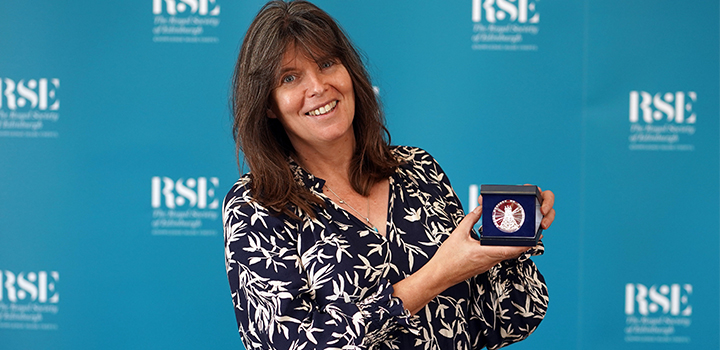
Prof Jenni Barclay honoured by the Royal Society of Edinburgh
Prof Jenni Barclay, Professor of Volcanology, has been honoured for her contributions to the emerging field of social volcanology by the Royal Society of Edinburgh with the James Hutton Medal.
Read more
Protect delicate polar ecosystems by mapping biodiversity
Polar regions contain vast, undiscovered biodiversity but are both the most-threatened and least-understood areas of the world.
Read more
Six UEA professors named in Highly Cited Researchers 2023 list
Six UEA professors have been named in the annual Highly Cited Researchers list for 2023, which celebrates some of the most influential researchers in the world today.
Read more