Using a UEA Literature degree to get ahead in Communications
By: Alumni Team
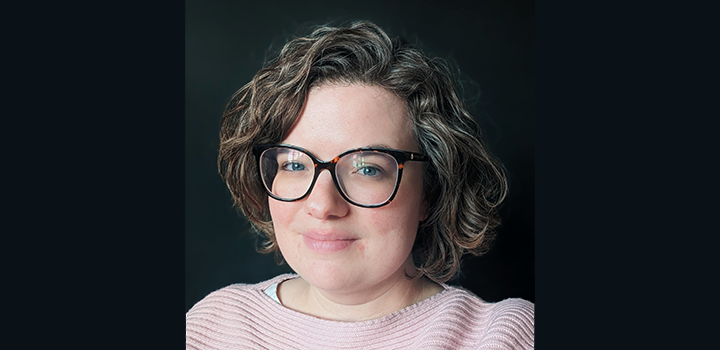
Rebecca Quigg studied BA English Literature at UEA from 2004 to 2007. After working at a booksellers she returned to UEA for a Master's and then a PhD, before going to establish a career in communications. She now works as an Associate Consultant for professional services firm WSP
What have you been up to since you graduated?
I’d managed literary events during my time as a student. This was as part of my job working for Toppings & Company Booksellers in Ely. My first really big event, one which meant a lot to me because he was somebody that I'd read, was Terry Pratchett in Ely Cathedral. We had over a thousand people! We also had Margaret Atwood, Hilary Mantel and UEA alumnus Kazuo Ishiguro!
I ended up returning to UEA to do a Master’s in modern and contemporary literature. And from there I went straight into doing a part-time PhD. So that was 2009 to 2016, and I graduated from that in July 2017.
Afterwards, I went into alumni relations working for one of the University of Cambridge colleges. I ended up doing some interim work as Deputy Development Director there before I left. And then I moved on to do comms and engagement work for the Cambridge and Peterborough Combined Authority, which was fascinating.
I started working there on October 19th 2019 – and four months later we went into lockdown. Everything was suddenly very different, particularly how we communicated with people. So, I moved from being in an organisation that was really keen for me to be sending out press releases to needing to talk to actual people about what was happening and what we were going to do about it. The Facebook page became very important! I did a lot of social media work. It was very instructive in the ways of how people engage on social media, and in understanding a lot about how politics and general public perceptions intersect.
I was there for five years, after which I moved to work on comms and engagement for an engineering consultancy firm. I specialise in transport projects and infrastructure projects, so helping to make sure that local people understand what's happening about the environment that they live in, helping them understand how they can have a say, which is so important.
If you're talking about bus services, for example, I try to make sure that the people we hear from are the people who use the bus most.
At the moment I'm on quite a unique project: a full-time secondment for a nationally-significant infrastructure project. It’s a challenge, but very exciting!
What was your ambition for your career when you started at UEA? Did you have a specific career path in mind?
Absolutely not; not at all! I was very young when I came to university. My birthday was five days before I arrived at UEA! I think I knew that an English degree was almost infinitely transferable and that was a conversation I'd had with my parents. I desperately wanted to keep doing the English after A-level. English can take you anywhere, so why wouldn't that be a good thing for you to do?
What made you want to study at UEA?
We came to visit the campus and it was a grotty grey, rainy February day. And I fell in love with it! I remember standing looking into the Square and going, yes, this is where I want to be. It was all about the landscape and the way that the people on campus were moving round its places. I had this incredibly powerful moment where I stood in a place looking at its absolute worst and went: yes, I want to be here.
And interestingly, it wasn't just me that ended up completely seduced by Norfolk. My parents had never really been to visit and they fell in love with Norwich and with the area when I was at university. And in 2013 they relocated and moved up to live on the North Norfolk coast. All because I went to UEA!
Did you get involved with any societies or extracurriculars during your time at UEA?
UEA gave me the flexibility to be able to work when I needed to, which gave me the money to be able to have that bit of extra breathing space; to have a bit room for manoeuvre, and that was important. But the other thing that was really important to me when I was here was the Creative Writing Society, which I joined in my first year (even though I wasn’t doing a creative writing degree). It's where I met my husband!
In your career what key tasks & skills are involved on a day-to-day basis, and what are/have been the most rewarding/challenging aspects?
The thing I do most in my day is talk to people. I spend a lot of time unpicking problems for people and helping them understand why the problem exists and what we can do to make it better. And that's both helping people to find the right way of communicating themselves, but also helping them to understand.
It can involve the people who live amongst where the developments are happening. They can feel like the things that are happening are completely out of local people's control, so I’m helping them understand what's going on and helping them to frame questions. It can involve taking technical documentation and finding a way to explain that is both clear and reassuring.
But it’s also about listening to people and having some emotional intelligence regarding how people might be feeling. Empathy is a big part of what I do!
Has your degree influenced your career?
I spend a lot of time understanding how people feel and trying to write for them in a way that is going to meet them where they are. And that is absolutely a critical skill that I learned during my degree: understanding things like register and tone, and seeing practical examples of that. Understanding the nuts and bolts of what a piece of writing is doing and how it might be read. It's not just about how one person reads a thing: it's about recognising the hundreds of different ways of reading and understanding.
And my writing obviously is a million times better than it would have been if I'd not done my degree! I was allowed to come at things from different angles during my degree. And I could write creatively as well as critically, which was both exciting and instructive. I write for so many different audiences in my job. I write for technical audiences. I write for local people. I write for colleagues who maybe have some understanding, but not all. And my ability to do that comes absolutely from my degree.
And also the ability to talk to people, because my undergraduate seminars were my first experience of having those critical, difficult conversations – sometimes really difficult, emotive conversations as well. And I think that's one of the things about studying literature, isn't it, that some of the conversations you have are about the way that people feel, and why?
Doing that in a way that's tactful and thoughtful while still not giving ground on your own view, is a skill that I don't think anybody really realises they're gaining until they come to use it – which I do, now, in my job!
What personal or professional achievement are you most proud of?
I helped support a donation for a building that will keep students safe and comfortable in one of the Cambridge colleges. I helped to ensure that that happened.
What were your experiences of Norwich as a city? Is there anything in particular that you miss or have fond memories of?
I would move back to Norwich in a heartbeat, if, professionally, I could. I would be back in Norwich because for me it's perfect. And, actually, I think this is very true for people who are coming to Norwich for university as well. It's that it's big enough to be exciting and small enough not to feel anonymous. I always think it's the perfect size for a city. It's got an interesting history. It's got interesting shops; it's got interesting restaurants. There is everything you could possibly need in Norwich.
You've also got the countryside right there, and you're close to the seaside. We used to do day trips to Cromer all the time!
It’s safe-feeling as well. As a woman walking along the street at night, I very rarely felt uncomfortable or unsafe. I think for my parents that was a big thing as well. They could tell that I was happy and comfortable in Norwich and I think also they felt that it was a friendly, comforting place to leave.
The fact that Norwich could feel like another home was huge for me. It's a really friendly place to be. Norwich is extraordinarily special to me still and I still get to come and visit now and again. We tend to leave the kids with my parents for a day and then we go to Norwich for the day and we get to go out!
Would you recommend studying at UEA? Why?
There are so many things about UEA! UEA was always somewhere where I felt that I could be myself, both academically and personally. Emotionally and academically, UEA gave me everything I could possibly need. I never felt that I was expected to be something else. I feel very much that I got to stretch my academic wings. It was life-changing! And actually, that's true of all my friends, whatever their backgrounds were, however they came to UEA.
I met so many wonderful people here. Many of my closest friends are UEA bods.
Is there any advice you would give to current students, wishing to follow a similar career path to you?
What I would say for anybody who's a current literature student at UEA is, don't underestimate the transferable skills that your degree is giving you; the ability to think critically, the ability to have open, clear, confident conversations in a way that doesn't expect you to back down. And particularly for female students. For women doing their degrees now, the ability confidently to stand up for your viewpoint and to be able to practise that in a safe environment is so important. Don't take that for granted and remember that you were given that opportunity as an undergraduate and you deserve it in your career.
What is next for you?
I’ve started a secondment working on a major infrastructure project. I'm really interested in how we help people on these huge projects because they have to happen, especially those involving renewable energy sources. You are looking at significant amounts of local disruption and we know that finding the space to be able to do what we need to support our internet use, our energy use, is crucial; to try and make those things environmentally friendly; to try and reach net zero.
I don't think there's ever not going to be space for work like mine and we have a government who have emphasised the need for consultation and engagement with local people when we're doing work of that kind.