UEA researchers unlock new clues in how human cells store iron
By: Communications
Scientists at the University of East Anglia (UEA) have made significant strides in understanding how human cells safely store and manage iron.
The findings shed new light on a fundamental biological process that affects global health.
Researchers say the work not only answers longstanding scientific questions but may also inform future efforts to tackle conditions linked to iron imbalance, from anaemia to iron overload disorders.
Lead researcher Prof Nick Le Brun, from UEA’s School of School of Chemistry, Pharmacy and Pharmacology, said: “Iron is essential for nearly all forms of life, playing a critical role in processes such as oxygen transport and energy production. Yet maintaining the right balance is crucial.
“Too little iron leads to deficiency – the world’s most common nutritional disorder – while too much can damage cells.
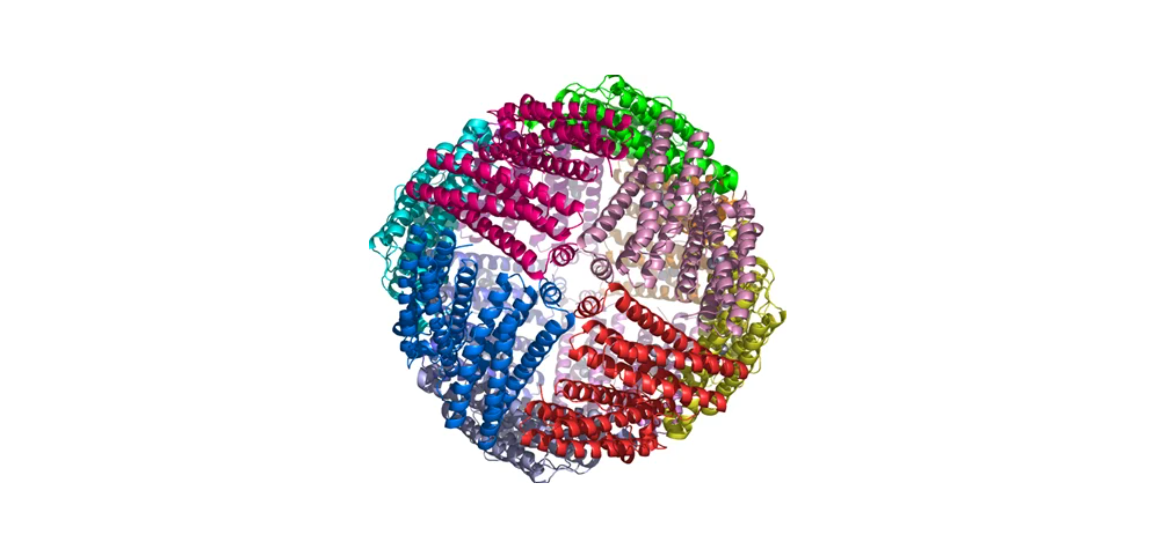
“To manage this delicate balance, the body relies on ferritin, a family of proteins that store iron in a safe, stable form.
“These proteins act like tiny spherical cages, capable of housing thousands of iron atoms in a rust-like mineral form. When iron levels drop, cells can draw on these reserves.
“Despite decades of research, exactly how ferritin proteins store iron at the molecular level has remained only partly understood. We wanted to better understand this process.”
The story so far
In earlier work published in 2025, the team captured the first high-resolution images of the very earliest stages of iron storage in human ferritin.
They identified a cluster of five iron atoms – known as a pentanuclear Fe(III) oxo cluster – forming on the inner surface of the protein.
This discovery pinpointed the site where iron mineral formation begins, answering a long-standing question about how storage is initiated.
The group also uncovered surprising differences in how related ferritin proteins operate.
In another 2025 study, they showed that mitochondrial ferritin – a version found within energy-producing structures in cells – uses a different chemical mechanism from the more typical cytosolic ferritin.
The finding suggests that mitochondrial ferritin may be adapted more for detoxifying excess iron than storing it.
Shedding new light on a fundamental biological process
Building on these advances, the team’s latest research reveals how iron is transported within the ferritin structure.
At the heart of the process is a specialised reaction site called the ferroxidase centre, where iron in its initial form reacts with oxygen and is converted into a storage-ready form.
The new study identifies a highly flexible section of the ferritin protein that acts as a pathway, guiding this processed iron into the protein’s central cavity.
Prof Le Brun said: “We used structural and kinetic analysis to track the movement of iron through this pathway and demonstrated its importance by altering a single component of the protein.
“When a key amino acid known as Glu61 was replaced, the transfer of iron was dramatically slowed.
“This discovery highlights the critical role of specific structural features in regulating iron storage and could have broader implications for understanding iron-related diseases,” he added.
Together, these findings provide a clearer and more detailed picture of how ferritin proteins manage iron – balancing storage, supply, and detoxification inside human cells.
‘Ferritin Iron Mineralisation: Route of Fe3+ Transfer From the Ferroxidase Centre to the Inner Cavity of Human H-Chain Ferritin’ is published in the journal Angewandte Chemie International Edition.
Related Articles

Scientists discover surprising new way to control light
UEA scientists have uncovered a hidden property of light that allows it to twist, spin and behave differently - without mirrors, materials or special lenses.
Read more
Anti-aging drug Rapamycin extends lifespan as effectively as eating less
The anti-aging drug Rapamycin has the same life-extending effect as eating less, according to new research from UEA.
Read more
UEA produces England's most decorated early career pharmacists
UEA’s first graduates from the NQP-IP programme are the only pharmacists in England to gain triple recognition of the PGDip, Independent Prescriber, and RPS Credential, through an integrated programme redefining early career pharmacist training.
Read more