UEA nutrition research supports community food initiative in Norwich
By: Communications
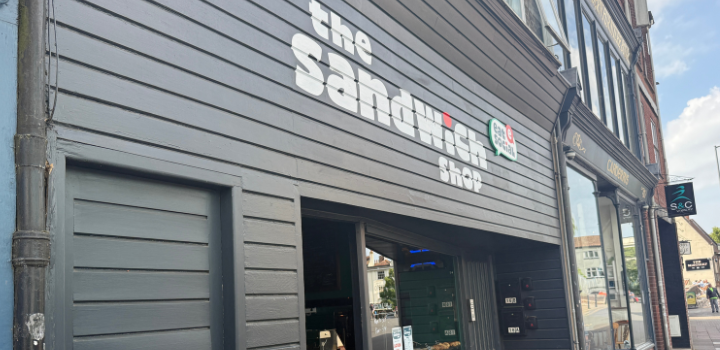
A University of East Anglia (UEA) academic is translating the insights from nutrition research into real-world impact by supporting a Norwich-based social enterprise tackling food poverty.
Prof Anne-Marie Minihane, from Norwich Medical School, recently joined Eat Social as a non-executive director. This community-focused initiative provides nutritious meals to families experiencing food poverty across the city.
Eat Social is funded in part through a café, The Sandwich Shop at 16 Wensum Street, Norwich, run by Prof Minihane’s partner, Lisa Vincent, which operates as a social enterprise to generate income for the initiative.
Lisa was inspired to act after attending a local anti-poverty meeting and hearing first-hand accounts of families struggling to access enough food.
She said: “I came away feeling overwhelmed. There were stories of children too hungry to learn, toddlers eating sand, and families with nothing in the house. I realised we had to do something practical.”
From research to reality
Prof Minihane’s involvement reflects UEA’s commitment to ensuring its research supports and benefits the wider community. Her work in nutrition translation has highlighted that around 20 per cent of people in the UK, including in Norwich, experience food poverty - meaning they may regularly go without adequate food.
“We generate a lot of knowledge about what a healthy diet looks like,” said Prof Minihane.
“But for many people, that simply isn’t the priority. If you can’t afford food, you’re not thinking about nutrition, you’re thinking about survival.
“This is about translating research into practice. If people don’t have access to food, then nutrition science alone won’t change anything.
“It’s not just about producing evidence anymore. It’s about how we deliver that knowledge at a community level and help support people to access healthy food.”
A sustainable model for community meals
At the heart of the project is a business that funds a social mission.
Lisa said: “We needed something sustainable, the café exists to fund the community meals. Without that, we’d be relying entirely on short-term funding or donations, which isn’t viable long term.”
Unlike many community food programmes, Eat Social aims not only to provide meals but to ensure they are nutritious and well-balanced.
Prof Minihane said: “Providing food and providing nutrition are not the same thing. This is about offering meals that genuinely support people’s health, not just meeting immediate hunger.”
Supporting children and families
The initiative places a strong emphasis on supporting children, given the long-term impact of poor nutrition.
Prof Minihane added: “If children don’t get enough food, it affects everything - their learning, mental health and development.
“And even if nutrition improves later in life, you can’t always fully reverse those impacts.
“You can’t support children in isolation. If parents are under pressure, financially and emotionally, they don’t have the capacity to prioritise cooking or nutrition. This is about supporting families as a whole.”
Since opening last month, the café has received positive feedback from customers, while laying the foundations to expand Eat Social’s community meal programmes.
Future plans include fundraising campaigns and further funding applications to support initiatives such as after-school meals for local families.
Lisa added: “We’ve seen how much it’s needed. Now it’s about building something that can grow and make a lasting difference.”
Find out more about Eat Social and the Sandwich Shop.
Related Articles
UEA subjects among UK best in student-focused league tables
The University of East Anglia has climbed to the top of a new league table for a variety of subjects – with Norwich named the nation's leading university city.
Read more
UEA secures share of £90 million to train next generation of medical researchers
The University of East Anglia will help train a new generation of researchers to tackle some of the biggest challenges facing human health – thanks to funding from the Medical Research Council (MRC).
Read more
ADHD diagnosis gap for girls from immigrant backgrounds
Girls from multilingual and immigrant families could be missing out on ADHD support - according to new research from the University of East Anglia.
Read more