UEA-inspired ‘Microbe Zoo’ set to reveal hidden worlds beneath our feet
By: Communications
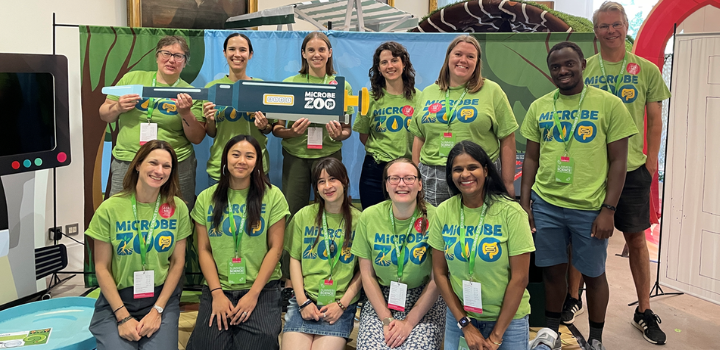
University of East Anglia (UEA) scientists are helping bring the unseen world of microbes to life at an immersive exhibition at the Royal Society in London this summer.
Designed to make science accessible, engaging and relevant to all, the ‘Microbe Zoo’ aims to turn traditional expectations on their head.
Rather than showcasing animals, visitors will instead explore the microscopic organisms that underpin life on Earth.
Led by the Centre for Microbial Interactions in collaboration with UEA, the project officially launched this week at the Royal Society’s Summer Science Exhibition.
An immersive journey
The Microbe Zoo will take visitors on an interactive journey beneath the surface, simulating the environments where microbes thrive.
The interior has been carefully crafted to evoke the feeling of being underground, with textured surfaces and extensive “root” structures running along the ceilings. These will not only shape the visual experience but also include interactive lighting elements, encouraging visitors to engage directly with the exhibit.
Volunteering for the project are the ‘zookeepers’, made up of staff and students from UEA, as well as collaborators from Norwich Research Park, including the Quadram Institute, John Innes Centre, Earlham Institute and The Sainsbury Laboratory.
Taimur Shahzad Gill, one of the ‘zookeepers’ and MSc Data Science student, said: “Guiding families through the Microbe Zoo was a joy. My favourite moments were watching children realise that trillions of microbes are quietly keeping them healthy, or that bacteria in a lake can generate electricity.
“I usually meet these microbes as rows in a sequencing file, so seeing the science come alive in front of a curious eight-year-old was a real reminder of why it matters."
Inspired by world-leading research
The concept for the Microbe Zoo draws on research taking place at Norwich Research Park - one of Europe’s largest centres for microbiology. UEA plays a key role within the park, contributing expertise in environmental sciences, health, and biological research.
By translating this work into a creative, hands-on experience, the project team hopes to bridge the gap between academic discovery and public understanding.
The project originally opened in the site of a former Debenhams store in Great Yarmouth, which now houses artists’ studios and community projects in a collaborative creative space known as Prima Ark. It also featured as part of this year’s Norwich Science Festival.
For more information, or to reserve free tickets, visit the Royal Society’s website.
Considering your options for September? Clearing is your chance to find the course that fits you.
Be ready for results day with the latest updates. Register for Clearing updates.
Related Articles

Why choosing the next James Bond matters beyond cinema, according to UEA expert
Following World James Bond Day earlier this week, speculation is mounting over who will become the next James Bond, with names including Jack Lowden, Callum Turner and Aaron Taylor-Johnson linked to the iconic role.
Read more
Applications open for UEA’s 2027 Creative Writing Summer School
Applications are now open for the 2027 Creative Writing Summer School at UEA, following the success of its inaugural programme this summer.
Read more
UEA and Anglian Water strengthen commitment to innovation, sustainability and regional impact
The University of East Anglia and Anglian Water are reaffirming their shared commitment to tackling some of the region's most pressing environmental challenges.
Read more