Scientists discover ‘hidden switch’ in immune cells that helps the body kill deadly fungus
By: Communications
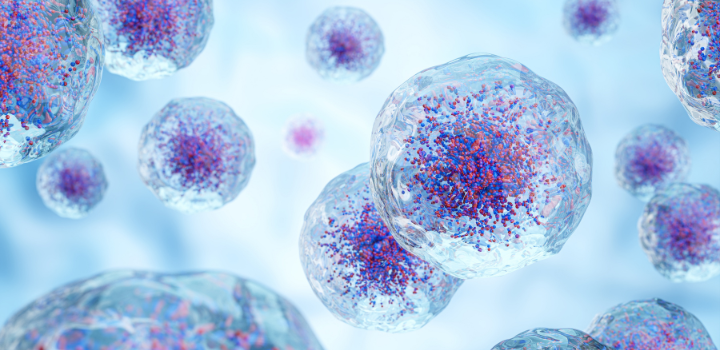
Scientists at the University of East Anglia (UEA) have contributed to discovering a “control switch” inside our immune cells that helps the body destroy dangerous fungal infections.
Researchers found that a protein called RAB5c helps white blood cells kill Aspergillus fumigatus - a common airborne fungus that can cause life threatening lung infections in people with weakened immune systems.
The study reveals that without this protein, immune cells are effectively disarmed - even though they appear to be attacking at full force.
The team hope their breakthrough could lead to new treatments for vulnerable patients.
A deadly fungus most of us breathe every day
Prof Tom Wileman, from UEA’s Norwich Medical School, said: “Aspergillus fumigatus is all around us. We inhale its spores daily, usually without any ill effects. But for people undergoing cancer treatment, organ transplant recipients or those with lung disease, the fungus can invade the lungs and spread through the body.
“Sadly, it kills tens of thousands of people worldwide each year.”
How the research happened
Scientists at UEA collaborated with the Babraham Institute and the Universidade de Sao Paulo (Brazil).
They watched immune cells under microscopes as they swallowed fungal particles, then selectively switched off different genes to see which ones were essential for killing the fungus.
By tracking what broke when one key gene (RAB5c) was missing and testing the results in infected cells and mice, they worked out how immune cells normally organise their killing machinery.
“Our immune systems have ‘Pac-man’-like cells called macrophages, which are normally responsible for engulfing and destroying these spores,” said Prof Wileman
“But our study shows that this process relies on a surprisingly delicate internal choreography.”
The immune system’s ‘clean up crew’
When a macrophage swallows a fungal spore, it forms a sealed compartment called a phagosome. Normally, this compartment acidifies, fills with toxic molecules and deploys a specialised clean up process known as LC3 associated phagocytosis, or LAP.
At the heart of this process, the researchers discovered, is the RAB5c protein.
Prof Wileman said: “RAB5c acts like a traffic controller inside immune cells. It ensures that lethal molecules and enzymes reach the phagosome at exactly the right moment.
“Without it, the clean up operation grinds to a halt.
A surprising twist
The team found that macrophages lacking RAB5c produced more toxic oxygen molecules - usually one of the immune system’s most powerful weapons.
Yet despite this apparent barrage, the fungus survived.
“This is because those toxic molecules were not properly harnessed,” said Prof Wileman.
“RAB5c plays a key role in assembling a microscopic ‘acid pump’ called the V ATPase, which allows oxygen radicals to trigger the final killing steps. Without the pump, the chemicals rage uselessly while the fungus remains alive.”
Proof in mice - and real consequences
To show that this wasn’t just a laboratory curiosity, the team infected mice with Aspergillus fungus. Animals unable to use this pathway had far higher fungal loads, more lung damage and stronger inflammatory responses.
These mice, which were unable to use the LAP-RAB5c pathway, were developed by Prof Wileman and Prof Ulrike Mayer, from UEA’s School of Biological Sciences.
In contrast, mice with a fully functioning LAP-RAB5c pathway cleared the infection far more effectively.
“Our results help explain why some immune responses fail, despite appearing aggressive, and why overstimulation doesn’t always mean better protection,” said Prof Wileman.
What it means for patients
The findings could have major implications for treating fungal infections - which are notoriously hard to diagnose and often resistant to drugs.
Rather than attacking the fungus directly, future therapies might enhance the patient’s own immune machinery, fine tuning it to work more efficiently.
The discovery may also have broader relevance beyond fungal disease. The same immune pathway is involved in killing viruses and bacteria, controlling inflammation, cancer immunity and autoimmune disorders.
This research received funding from the Biotechnology and Biological Sciences Research Council (BBSRC).
‘RAB5c orchestrates LC3-associated phagocytosis to promote microbicidal function of macrophages’ is published in the journal Science Advances.
Related Articles
DNA analysis shows colorectal cancer has unique microbial fingerprint
Colorectal cancer is unique in having its own microbial ‘fingerprint’ – according to new UEA research.
Read more
UEA showcases world-leading advances in prostate cancer diagnostics
UEA scientists are set to showcase groundbreaking advances in prostate cancer research at the House of Commons. They will present two new diagnostic tests at a meeting with parliamentarians and charities.
Read more
Diabetes drug could help cancer patients make better recovery
A common type of diabetes medication could help cancer patients make a better long-term recovery, according to new research from UEA.
Read more