New Pro-Vice Chancellor appointed for Science
By: Communications
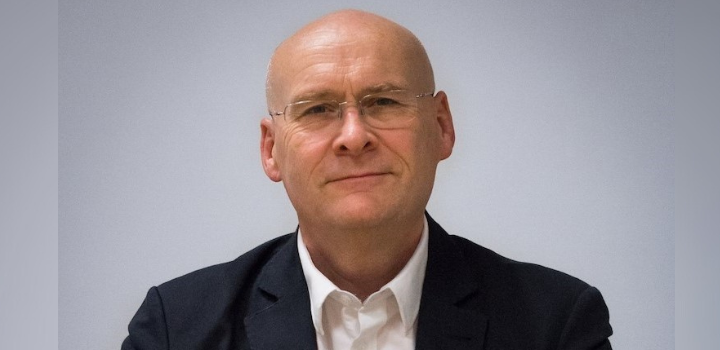
Professor Rob Field has been named as the new Pro-Vice Chancellor (PVC) for the Faculty of Science at the University of East Anglia (UEA).
Prof Field, returns to UEA having graduated with a BSc degree in Biological and Chemical Sciences in 1986, and a PhD in Chemistry in 1989. He also taught at the University as a Professor in the School of Chemical Sciences and Pharmacy, and he has been an Honorary Professor in Chemistry at the University since 2007.
He joins from the University of Manchester’s Institute of Biotechnology, where he played a leading role in developing research and innovation opportunities across biotechnology and engineering biology. Prof Field has also served the broader community as President of the Chemistry-Biology Interface Division of the Royal Society of Chemistry. He is co-founder and Director of spin-out company Iceni Glycoscience, working on the development of new carbohydrate-based diagnostics and therapeutics. Rob was recipient of the Royal Society of Chemistry Carbohydrate Award in 1996 and was awarded a Fellowship from the Association of Carbohydrate Chemists and Technologists, India in 2018.
Rob comes into his new position as an active researcher, with a focus on carbohydrate chemistry and its impact on biology, environment, medicine and health. His research spans discovery science through to real-world impact, as shown by his work on diagnostics tests for infectious diseases and studies on understanding and mitigation of harmful algal blooms on the Norfolk Broads.
Rob said: “It is an honour to be entrusted with leading the development of science and engineering at UEA.
“These are challenging times right across the University sector, but UEA has much to be proud of and a firm base to build upon. I am very much committed to interdisciplinary and team science, in keeping with the ‘do different’ ethos of the University. Exciting times ahead.”
Vice-Chancellor Prof David Maguire said: “It’s a pleasure to be able to welcome Rob to UEA to head up our Faculty of Science, which is renowned for its outstanding teaching and research in a number of areas. Rob of course knows this very well himself, having previously studied and taught here, and I look forward to working with him.
“I’d also like to thank Prof Mark Searcey, who has done sterling work as Pro-Vice-Chancellor for Science for the last five-and-a-half years. Mark will be continuing his academic work at the University and the faculty is very much indebted to all the hard work he has put in and leadership he has provided during this time.”
Prof Field will be joining UEA and starting in his role in October.
Related Articles

Scientists reaffirm ‘incontrovertible’ evidence of human influence on climate
The scientific evidence for human-caused global warming is stronger than ever, according to a major new review – despite a United States government report questioning the science.
Read more
OpenAI model halt is responsible move, UEA expert says
Halting the roll out of Open AI’s new model over safety concerns is the “ethical and responsible” thing to do – according to an expert in artificial intelligence at the University of East Anglia.
Read more
UEA subjects among UK best in student-focused league tables
The University of East Anglia has climbed to the top of a new league table for a variety of subjects – with Norwich named the nation's leading university city.
Read more