MPs meet students taking first steps towards medical careers at UEA
By: Communications
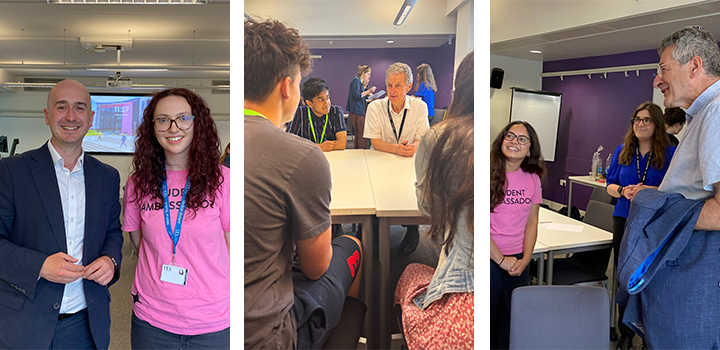
Local MPs visited the University of East Anglia (UEA) to celebrate a scheme to widen access to medical degrees for underprivileged students, set up in collaboration with the Medical Schools Council (MSC).
Peter Prinsley MP and Ben Goldsborough MP visited the campus on Wednesday to hear about the initiative, which has seen study offers quadruple for free school meals eligible students.
They met with sixth-form students on UEA’s Preparing for Medicine programme and spoke to young people from across the East of England who are aiming to become doctors.
Students involved in the scheme come from a range of under-represented backgrounds, including coastal and rural communities where progression into medicine has historically been low.
The programme, supported by the Medical Schools Council (MSC), NHS England and UEA’s Access and Participation Plan, has expanded significantly in response to national concern about unequal access to medical careers, highlighted by Fostering Potential.
The report emphasised that despite a decade of progress, entry to medical school amongst young people still varies by up to 20-fold across the UK, with remote and rural communities still the furthest behind.
During the visit, MPs also met UEA academics and current medical students who previously came through the same pathway.
Peter Prinsley, Labour MP for Bury St Edmunds and Stowmarket, said: "I was a surgeon for 40 years before I was an MP. I also studied and taught at UEA. It’s great to see such committed young students – I hope they choose UEA!”
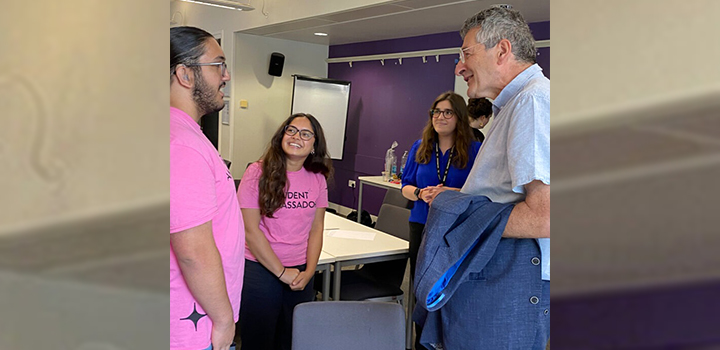
Image: Peter Prinsley MP meeting UEA student ambassadors
Ben Goldsborough, Labour MP for South Norfolk, said: “Rural areas are in desperate need of support when it comes to accessing higher education, and to see the work that is going on at the University of East Anglia is outstanding.
“Being able to give young people from disadvantaged backgrounds, or backgrounds that have never interacted with higher education, this opportunity really makes a lasting difference, and I am so proud of the work that has gone into this scheme.
“Everyone needs to know about it because going forward these are our GPs, oncologists, nurses and paramedics of the future.”
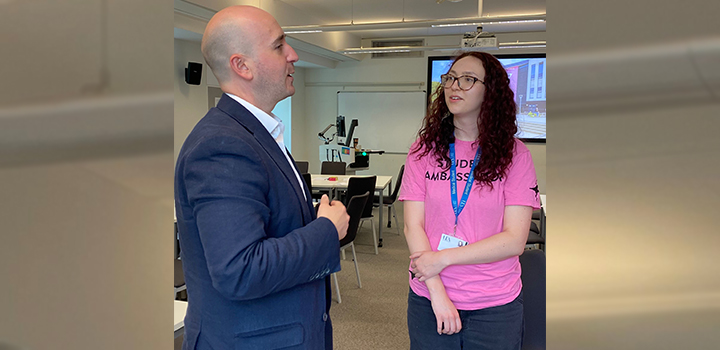
Image: Ben Goldsborough MP meeting UEA Medicine student, Bethany Way
Preparing for Medicine supports Year 12 and 13 students from widening participation backgrounds through mentoring, skills sessions and tailored workshops, including mock interviews and University Clinical Aptitude Test (UCAT) preparation.
Students who complete the programme and meet course requirements are guaranteed an interview to study Medicine at UEA.
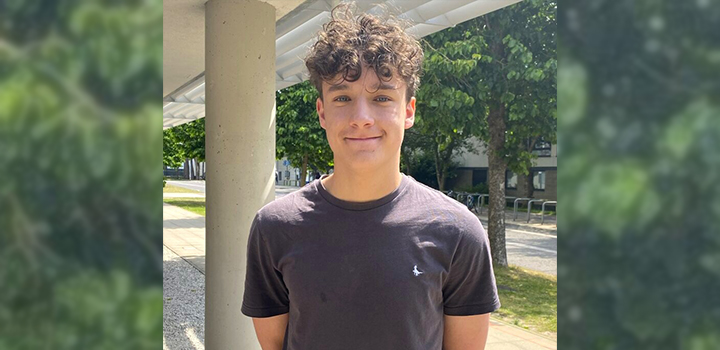
Image: Lennon Punter, a participant on the Preparing for Medicine programme
Lennon Punter, a Year 12 participant, said: “My sister, who is two years older than me, also went through this course. Coming back every day she was raving about it and how much it helped her, so I kept my eye out and applied as soon as I could.
“The programme has helped me massively. Before, I heard little bits about medical school, but this has really told me what I need to do and given me the help to look out for opportunities on that journey, instead of just telling me I need certain grades to get in.”
Bethany Way, a fourth-year MBBS Medicine with a Gateway Year student at UEA who previously took part in the programme, said: “It made me realise medicine was definitely what I wanted to do. I didn’t get much work experience due to COVID, so I got to talk to doctors and medical students and saw how passionate everyone was.
“They supported me during my application. I got an interview, got into UEA, and was offered a scholarship to help with my tuition fees. It’s lovely to pass on what I had and help the next generation.”
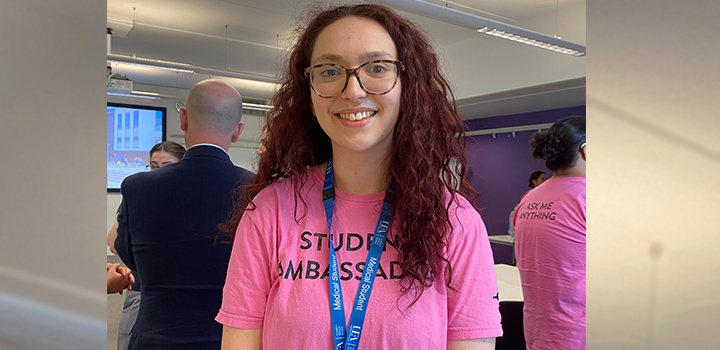
Image: Bethany Way, a fourth-year MBBS Medicine with a Gateway Year student who went through the Preparing for Medicine programme
Dr Charlie Williams, Lecturer in Medicine and Widening Participation Academic Lead at Norwich Medical School, said: “In the East, particularly around coastal areas, we have what are known as ‘cold spots’, areas where no one has attended medical school. We know that health inequalities exist in rural and coastal communities, and that representation and lived experience can be a driver for change.
“We hope that inspiring students from these areas will not only support them into medicine, but also help address wider healthcare challenges in the future.”
Clare Owen, Director of the Medical Schools Council, said: “This year we saw an exceptional level of interest, with over 2,500 applications to our medicine summer schools - almost double the number from last year.
“It is incredibly encouraging to see so many aspiring healthcare professionals eager to explore a future in the NHS and rewarding to watch their confidence grow as they gain valuable insight into medical careers and the application process.
“We are proud to work alongside universities such as University of East Anglia, whose commitment is helping to ensure that students from all backgrounds can see themselves succeeding in medicine and contributing to the future of our health service.”
UEA’s Preparing for Medicine programme has a strong track record of success. Between 2018 and 2021, more than 55 per cent of participants went on to study medicine or dentistry.
The initiative forms part of UEA’s wider outreach work, which engages up to 18,000 students each year, many from under‑represented backgrounds.
Related Articles

Thousands of heart patients could avoid permanent stents
Thousands of heart patients could be treated without having a metal stent permanently implanted in their arteries - according to research from the University of East Anglia.
Read more
Stark male-female differences revealed in autoimmune diseases misdiagnosed as mental health conditions
Females with autoimmune diseases are more likely than males to report mental health misdiagnoses and face longer diagnostic delays, University of East Anglia and Cambridge research has found.
Read more
UEA secures share of £90 million to train next generation of medical researchers
The University of East Anglia will help train a new generation of researchers to tackle some of the biggest challenges facing human health – thanks to funding from the Medical Research Council (MRC).
Read more