Land-intensive carbon removal needs better siting to protect biodiversity
By: Communications
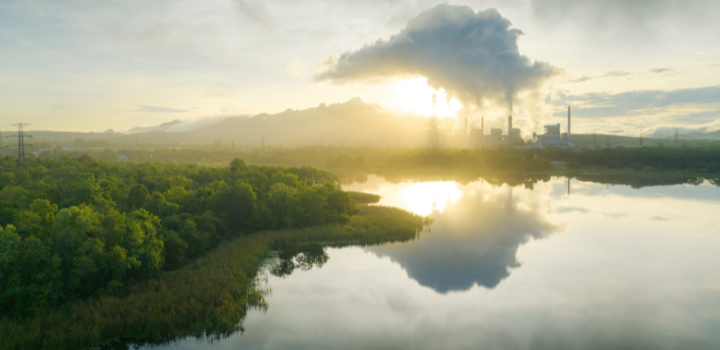
Significant reliance on land-based methods of carbon dioxide removal can protect biodiversity by avoiding climate impacts - but it could also compete with biodiversity protection unless there is better site selection, according to a new study.
Research published today in Nature Climate Change analysed future projections across five large-scale modelling projects, as well as considering 135,000 species and 70 biodiversity hotspots, to produce spatial mapping of where land-based carbon removal and storage may be sited in the future.
Led by scientists at the Potsdam Institute for Climate Impact Research (PIK), it draws on biodiversity data from the Wallace Initiative, led by Dr Jeff Price and colleagues from the Tyndall Centre for Climate Change Research at the University of East Anglia (UEA), and collaborators at James Cook University.
The study looked at methods of atmospheric carbon dioxide removal and storage such as planting forests or bioenergy with carbon capture and storage (BECCS).
The authors’ approach allows for a risk-to-risk assessment, not only focusing on overlaps between biodiversity areas and land allocated to carbon removal but also showing the positive impacts of it in avoiding climate impacts on biodiversity.
In ambitious emissions reductions scenarios, where global warming returns to 1.5°C by 2100 after temporarily overshooting this target, up to 13 per cent of areas allocated to carbon dioxide removal would overlap with important biodiversity sites.
The authors emphasise that this would not necessarily mean the loss of these areas, depending on the specific implementation of removals. Nevertheless, given how sensitive some species are to human intervention, this remains a concern.
“As the world warms, we should be responding by cutting emissions as quickly as possible, but we are also going to need to be scaling carbon removal,” said Dr Ruben Prütz, a PIK researcher and lead author of the study.
“We can see from our maps that carbon dioxide removal has the potential to encroach on the areas that shelter biodiversity from harm in a warmer world. Careful site selection for carbon removal is thus critical to preventing negative biodiversity outcomes.”
Co-author Dr Price, from UEA, said: “This study highlights that improperly planned forest planting can pose significant risks to biodiversity, potentially outweighing the mitigation benefits of carbon dioxide removal.
“Understanding potential conflicts and overlaps between climate action and biodiversity conservation is crucial if we are to ensure we can achieve targets to reduce emissions, or at least the impact of them, and preserve vital habitats and species.”
Increased land use change for carbon removal could also conflict with internationally agreed targets for biodiversity conservation. The 2022 Kunming-Montreal Global Biodiversity Framework aims to “bring the loss of areas of high biodiversity importance, including ecosystems of high ecological integrity, close to zero by 2030”.
Other carbon dioxide removal technologies, such as direct air carbon capture and storage, could supplement land-based options and reduce spatial competition, but these are in earlier phases of technological development and much more expensive.
Benefits for biodiversity through carbon removal
However, the risk-to-risk analysis also reveals that the effects of carbon removal on temperatures could have positive outcomes for biodiversity. The study shows that effective implementation of reforestation and BECCS could reduce the long-term loss of biodiversity due to climate factors by up to 25 per cent, producing net benefits. But the authors stress that positive outcomes depend on the ability of these ecosystems to recover from higher peak temperatures, which is extremely uncertain.
“We have to recognise that our continued use of fossil fuels is both punishing us, as we suffer from extreme events and other climate impacts, and reducing the tools we have to implement solutions,” said Dr Prütz.
Equity and land-based carbon removal
Land use change for carbon removal is also unequally distributed across different regions of the world. The models allocate up to 15 per cent of biodiversity-relevant land in low and middle-income countries to forest-based carbon removal, compared to just seven per cent in wealthy countries.
“This puts a greater burden on the countries who have historically contributed less to emissions,” said Prof Sabine Fuss, PIK researcher and a co-author of the paper. “It also stresses the need for international finance to flow from wealthier countries to those that need it for biodiversity protection, to safeguard a common good.”
The work was supported by funding from the European Union’s Horizon 2020 research and innovation programme.
‘Biodiversity implications of land-intensive carbon dioxide removal’ is published in Nature Climate Change on January 30.
Related Articles

New project to benefit net zero targets, soil health, biodiversity and agriculture
Researchers at the University of East Anglia (UEA) have received a share of £14.5 million in funding to support projects that seek to revolutionise agricultural practices, land use change and soil health in the pursuit of a more sustainable future.
Read more
Research quantifies “gap” in carbon removal for first time
New research involving UEA suggests that countries’ current plans to remove CO2 from the atmosphere will not be enough to comply with the 1.5 ºC warming limit set out under the Paris Agreement.
Read more
Scientists reaffirm ‘incontrovertible’ evidence of human influence on climate
The scientific evidence for human-caused global warming is stronger than ever, according to a major new review – despite a United States government report questioning the science.
Read more