Gypsy, Roma and Traveller storytelling inspires national literacy rollout
By: Communications
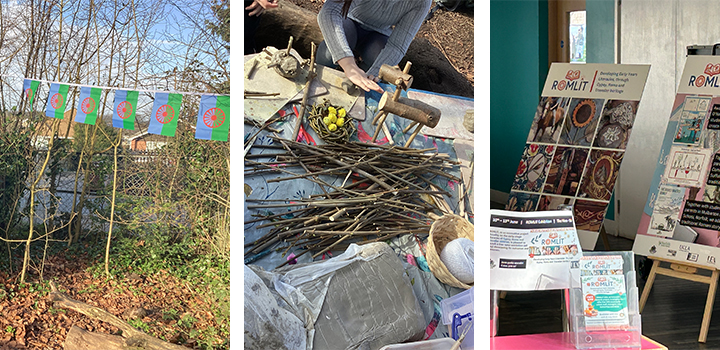
A University of East Anglia-developed literacy programme, inspired by Gypsy, Roma and Traveller storytelling, is being adopted by schools and organisations across England.
With an aim of improving literacy for Gypsy, Roma and Traveller pupils, the scheme places storytelling at the centre of early-years education.
Working with youngsters, their families and schools, the Romani and Traveller Early Literacies (ROMLIT) programme has co-created new resources including storybooks, free downloadable literacy materials and teacher training.
Originally developed through partnerships in the East of England, the project is now working with schools and organisations across West Sussex, Worcestershire, Chesire, West Midlands, and Cumbria, with a national storybook planned to launch in September.
The initiative places shared storytelling at the heart of early years education, supporting Gypsy, Roma and Traveller pupils while celebrating their voices, histories and cultures.
The rollout, which coincides with the National Year of Reading, comes against a backdrop of persistent educational inequality.
Government data shows Gypsy, Roma and Traveller pupils continue to record among the lowest attainment outcomes of any ethnic group in England, with only around one in five meeting expected standards at Key Stage 2, compared with more than three out of five nationally.
ROMLIT seeks to address this gap by rethinking what early years literacy looks like, starting from children’s lived experiences rather than perceived deficits.
Dr Spyros Themelis, Associate Professor in Education at UEA and Principal Investigator for ROMLIT, said: “Gypsy, Roma and Traveller pupils remain England’s lowest attaining ethnic groups, and this gap starts early and widens year on year, that makes early years intervention critical.
“Too often, the focus is on what children are perceived to lack. Our programme turns that approach on its head by recognising the knowledge, skills and literacy practices already present in Gypsy, Roma and Traveller families and communities.”
Storytelling as a force for learning
ROMLIT places storytelling at the centre of early years education, recognising that children develop language, confidence and narrative skills not only in classrooms but through family life, community and everyday experience.
The programme embraces oral storytelling traditions, visual symbols, pattern‑making, play and memory, broadening dominant ideas of literacy beyond print alone.
Children, families and teachers work together to co‑create new resources, including storybooks and “story sacks” containing stories and hands-on materials for use in early years settings.
Dr Themelis said: “This isn’t a catch-up scheme, it’s about widening what we value as literacy. When children see their own stories and family knowledge reflected in school, it builds confidence, engagement and motivation to learn.
“Gypsy, Roma and Traveller communities need to be approached as champions in various forms of literacy.”
Benefits beyond the classroom
Schools involved in ROMLIT report benefits that extend beyond pupils’ literacy development. By valuing home languages and everyday storytelling, the programme supports parents and carers to recognise their own role in learning and helps build trust between schools and GRT communities.
Julia Moore, English as an Additional Language (EAL) Lead at Whitehouse Community Primary School in Suffolk, said: “The project brought in parents we rarely see in school. The sessions were uplifting and empowering, showing families that they are already actively involved in their children’s learning, even when they don’t realise it.”
At a celebration event held at UEA on 20 May, families and students shared their experiences, one Year 4 student, whose sister took part in the project the previous year, said: “I felt so proud seeing my sister reading the story in the lecture theatre.”
A Year 3 parent echoing this pride, said: “Seeing my children on stage and hearing their stories read out at the University was so special.”, with another parent adding that “the project helps me learn more about my own heritage so I can tell others about it and keep it alive.”
Expanding across England
To date, ROMLIT has trained more than 300 teachers and early‑years practitioners through partnerships with schools, local authorities and organisations including the University of Cambridge.
As the programme expands across different regions of England, ROMLIT is releasing new free‑to‑download literacy resources, alongside a Good Practice Guide supporting schools to move away from deficit-based approaches to literacy.
The team is also working with schools in five regions of England including Cumbria, West Sussex, Worcestershire, and West Midlands, to co‑create a new storybook, published this September, that brings together Gypsy, Roma and Traveller storytelling traditions with contributions from children of all backgrounds.
The programme has also been invited to contribute to national and European education initiatives focused on reducing educational inequality through culture, creativity and community knowledge.
ROMLIT received funding from the Joyce Morris Legacy Fund for Early Years Literacies.
Related Articles

Gypsy, Roma and Traveller History Month
Jethro Shirley-Smith, Research Associate with UEA’s ROMLIT project has written a blog for Gypsy, Roma and Traveller History Month which aims to celebrate, raise awareness, challenge myths and amplify the voices of Gypsies, Roma and Travellers
Read more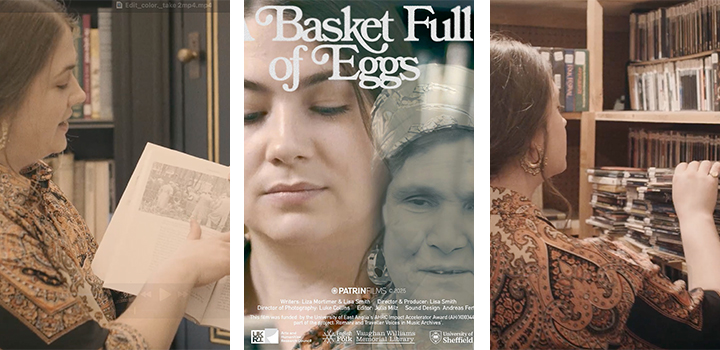
Exploring Romani and Traveller voices in Britain’s folk music history
This Gypsy, Roma and Traveller History Month, discover the overlooked voices that shaped Britain’s folk music heritage through a new UEA-produced documentary.
Read more
Social media ban needs serious investment and support, UEA expert says
A social media ban for young people needs serious investment in support systems, not just a start date – according to a social media and education expert at the University of East Anglia.
Read more