Could an antidepressant help stroke survivors find emotional stability?
By: Communications
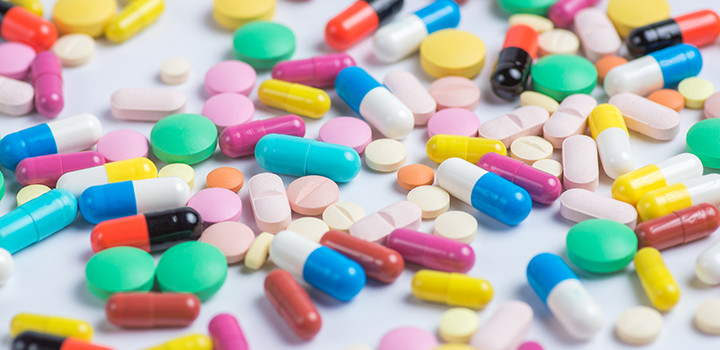
UEA researchers are launching a trial to see if the commonly prescribed antidepressant Sertraline could reduce emotional changes caused by having a stroke.
When a stroke happens, it can damage areas of the brain that regulate emotional expression - causing sudden uncontrollable episodes of laughing or crying.
This condition is known as post-stroke emotionalism, and it affects around one in five stroke survivors.
It is hoped that Sertraline could provide a safe, effective and cost-efficient way of treating the condition.
Participants needed
Now, the research team are looking for participants - who have experienced a stroke and are experiencing emotionalism - to take part in the study, which has been funded by the National Institute for Health and Care Research (NIHR).
Lead researcher Prof Niall Broomfield, from UEA’s Norwich Medical School, said: “After someone has a stroke, they may experience emotionalism - where their emotions become harder to control.
“This can lead to sudden episodes of laughter or crying without clear reason, in situations that would not have been the case before the stroke.
“These sorts of emotional changes can cause significant distress and social withdrawal and may make getting out or returning to work feel daunting.
“We want to see if taking the medicine Sertraline can help.
“We know that Sertraline helps regulate brain chemicals like serotonin, which support emotional stability by restoring balance to the disrupted brain systems.”
Although medicines like Sertraline have previously been studied for treating emotional challenges after stroke in a few small trials, their effectiveness remains uncertain.
This new large study will provide definitive evidence.
Eligible participants will be randomly assigned to receive either a daily dose of the medicine Sertraline or a dummy treatment, for six months.
They will also be asked to complete a set of questionnaires before they start treatment, and again at three, six and 12 months.
“Ultimately, we want to help stroke survivors regain emotional balance, reconnect socially, and feel more confident about returning to daily life,” added Prof Broomfield.
For more information about taking part in the study, email: enquiries.easetrial@uea.ac.uk.
Related Articles

The app that is improving therapy for stroke survivors
A mobile phone app is improving care for stroke survivors and helping health staff make evidence-based decisions on-the-go to speed up recovery according to new research from the University of East Anglia.
Read more
Putting virtual rehab for stroke patients to the test
Researchers at the University of East Anglia have been putting virtual reality rehabilitation for stroke survivors to the test.
Read more
UEA researchers develop new tool to reduce stroke risk
Researchers at the University of East Anglia have developed a new way of identifying patients at risk of an irregular heartbeat, known as atrial fibrillation.
Read more