Can war lead to women’s empowerment? Insights from a global network of scholars and gender advocates
By: Ulrike Theuerkauf, Matt Heaton & network members
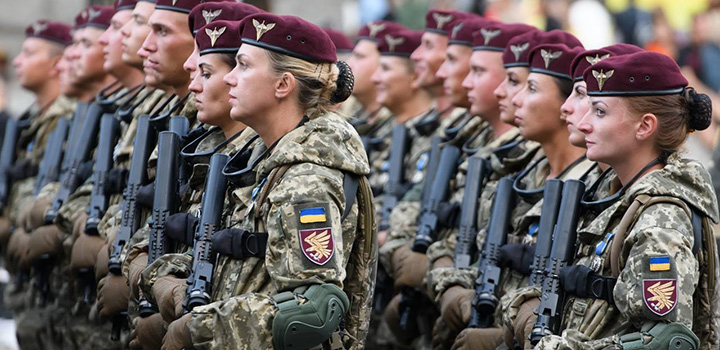
Gender dynamics affect all aspects of life, including experiences during and after war. With arguments on the potentially ‘development-enhancing’ effects of violent conflict being on the rise (Duvendack and Theuerkauf 2025), a new research network of scholars and gender advocates seeks to understand how war and its aftermath affect women’s access to formal positions of political power within national armed forces, parliaments and governments.
In recent years, a growing number of researchers have posited that war can have “transformative potential … for female empowerment” (Bakken and Buhaug 2021: 982), opening space for an expansion of women’s rights and roles. This expansion arguably is driven by a combination of different factors, ranging from pragmatic necessity (of women ‘filling the gap’ of men who fight, died or have been imprisoned in combat), through war creating new social norms and political orders, to pressures by international actors and local women’s groups during peacebuilding processes (Bakken and Buhaug 2021; Hughes and Tripp 2015; Webster et al. 2019).
Why war might not be transformative for women
Despite their rising prominence, arguments on the transformative potential of war should not be taken at face value. Rather, further interrogation is needed about how claims of ‘transformation’ hinge on the definition of ‘empowerment’, and why supposed changes in gendered access to political power during war may not last long – or turn out to be largely performative – after war has ended (Gutiérrez and Murphy 2023). Overall, there is a need for greater research and evidence to understand how different types of war and their aftermath affect the political power of women and the potential for long-term changes in gender hierarchies.
To address this knowledge gap, researchers from the School of Global Development at the University of East Anglia have partnered with scholars and gender advocates in Austria, Colombia, Ireland, Spain, Ukraine, the UK and the USA, to develop a new research project on gender dynamics during and after war in Colombia, Northern Ireland/the UK and Ukraine. In a series of workshops from March 2024 to March 2025, they came together, online and in-person, to discuss women’s experiences during and after war.
Associate Visiting Professor Yevgeniia Gnatchenko, Norwich Business School, University of East Anglia, said: “The workshops were an amazing opportunity to share insights and ideas. We were struck by the consistency of certain gender dynamics, despite notable differences in the violent conflict history of Colombia, Northern Ireland/the UK and Ukraine”.
Shared gender dynamics
Common gender dynamics noted for Colombia, Northern Ireland and Ukraine included tensions in gendered expectations on women to be strong but also caring during war, and between experiences of power and solidarity but also sexism and harassment in armed groups. In general, the workshop discussions highlighted the complexity of women’s experiences depending on their intersecting identities and rapidly shifting contexts during and after war, and the opportunities that arise from analysing this complexity comparatively, in order to learn more about the conditions under which there may or may not be ‘transformative potential’ of war.
Associate Professor Ulrike Theuerkauf, School of Global Development, University of East Anglia said: “We have already learnt so much in the workshops. It is a real privilege to now have a network to drive further research and advocacy for women’s access to formal positions of political power”.
The initial workshops that led to this collaboration were funded by the British Academy, Council for At-Risk Academics (CARA) and the Leverhulme Trust.
Network members
The network members include:
- Yevgeniia Gnatchenko, Principal Investigator of the Workshop Series and Visiting Associate Professor in the Norwich Business School, University of East Anglia (UK)
- Barbara Cleary, Chair of SecurityWomen (UK)
- Juliet Colman, Director and Founder of SecurityWomen (UK)
- Luisa Dietrich Ortega, Director of gender.consulting, and Chairwoman of Frauen*Solidarität, Vienna (Austria)
- Maren Duvendack, Professor of Evaluation in Economics, School of Global Development, University of East Anglia (UK)
- Roger Few, Professorial Research Fellow in Environment, Risk and Development, School of Global Development, University of East Anglia (UK)
- Sarah Jenkins, Lecturer above the bar in Comparative Government and Politics, University of Galway (Ireland)
- Cera Murtagh, Associate Professor in Comparative and Irish Politics, Villanova University (USA)
- Justina Pinkeviciute, Visiting Research Fellow, Department of Politics and International Studies, University of Warwick (UK)
- Iokine Rodriguez, Professor in Environment and Development, School of Global Development, University of East Anglia (UK)
- Cristina Sala-Valdés, Visiting Researcher, School of Global Development, University of East Anglia (UK)
- Alina Sarnatska, PhD in Social Work (Ukraine)
- Caitlin Scott, Senior Lecturer in Global Development Management, School of Global Development, University of East Anglia (UK)
- Ulrike Theuerkauf, Associate Professor in Politics and Global Development, University of East Anglia (UK)
- Sophie Whiting, Senior Lecturer in Politics, Department of Politics, Languages and International Studies, University of Bath (UK)
References
Bakken, Ingrid Vik and Halvard Buhaug. 2021. Civil War and Female Empowerment. Journal of Conflict Resolution 65(5): 982-1009.
Duvendack, Maren and Ulrike G. Theuerkauf. 2025. Why Gendered Quantification Trends Are a Problem: Post-Traumatic Growth Arguments and the Civil War Malestream. Conflict Management and Peace Science 42(3): 245-268.
Gutiérrez, José A. and Emma Murphy. 2023. The Unspoken Red-Line in Colombia: Gender Reordering of Women Ex-Combatants and the Transformative Peace Agenda. Cooperation and Conflict 58(2): 211-230.
Hughes, Melanie M. and Aili Mari Tripp. 2015. Civil War and Trajectories of Change in Women’s Political Representation in Africa, 1985–2010. Social Forces 93(4): 1513-1540.
Webster Kaitlyn, Chong Chen and Kyle Beardsley. 2019. Conflict, Peace, and the Evolution of Women’s Empowerment. International Organization 73(2): 255-289.
Related Articles
New guide puts Indigenous Peoples, local communities and rights at the heart of ecosystem restoration
A major new report outlines how experts can better place Indigenous Peoples and local communities at the heart of decision-making in ecosystem restoration efforts.
Read more
Inequalities grow in cities as heat and daylight patterns transform urban life
Changing patterns of heat and daylight in urban environments are creating growing inequalities, with climate-related shifts reshaping daily life and disproportionately affecting vulnerable communities.
Read more
Indigenous knowledge key to building healthier and more sustainable food systems
Traditional and Indigenous knowledge could play a vital role in addressing some of the world's most pressing challenges, including climate change, biodiversity loss, and poor health and nutrition, according to a new review of current research.
Read more