AI video translation shows promise but humans still hold the edge
By: Communications
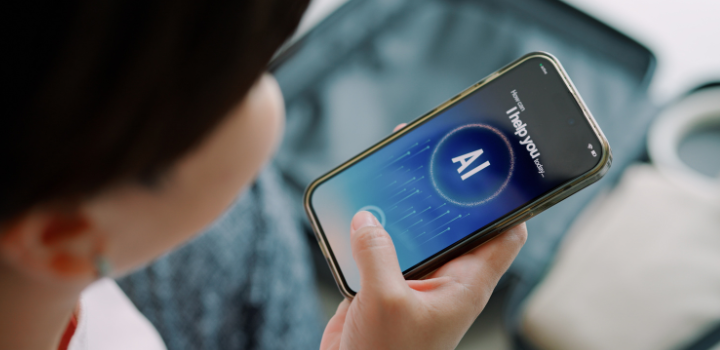
AI video translation is not yet a perfect substitute for human translation, according to new research from the University of East Anglia (UEA).
A new study shows that AI tools can be useful when speed and clarity are priorities.
But human translators remain crucial for tone, cultural nuance and for sounding natural.
Jiseon Han, a lecturer in digital marketing at UEA’s Norwich Business School, said: “As brands race to reach global consumers on platforms like TikTok, Instagram, and YouTube, a new question has emerged - can generative AI truly replace humans in video translation?
“We decided to put it to the test."
How the research happened
Researchers examined how consumers in different countries respond to marketing videos translated by generative AI tool HeyGen compared to videos translated and performed by human speakers.
In two experiments, one with Indonesian consumers and another with US and UK consumers, participants watched marketing videos delivered either by native human speakers or by AI-translated versions.
The AI-generated videos automatically converted language, voice, and even lip movements to match the target language - replicating what many global marketers are now testing in real campaigns.
The results reveal a mixed picture.
AI less natural
Jiseon Han, a lecturer in digital marketing at UEA’s Norwich Business School, said: “We found that viewers consistently found AI-translated videos less natural and less native-sounding than those performed by humans.
“However, AI performed better on language comprehension when translating into English, likely reflecting the greater availability of English-language training data in AI models.
“Interestingly, these perceptual differences did not affect engagement intentions that participants were just as likely to like, share, or comment on AI-translated videos as they were on human ones.”
These insights suggest that AI video translation is not yet a perfect substitute for human translation, but it already offers practical value.
“For marketers, AI can be a great choice when speed and straightforward messaging matter most, But when it comes to capturing tone, personality, and cultural context, human expertise is still irreplaceable,” she added.
“Generative AI can already handle parts of video translation that once required entire production teams,” said the lead author Risqo Wahid from the University of Jyväskylä, Finland.
“But consumers still notice when something feels off. The human touch still matters, especially in how a message sounds and feels,” he added.
As AI models evolve, the study provides a timely benchmark for understanding how consumers perceive AI-translated content today, highlighting both the opportunities and the limits of automation in global marketing communication.
‘EXPRESS: Generative AI for Video Translation: Consumer Evaluation in International Markets' is published in the Journal of International Marketing.
Related Articles

Artificial Intelligence tool could reduce common drug side effects
AI could help clinicians assess which patients are likely to encounter the harmful side effects of some commonly used antidepressants, antihistamines and bladder medicines.
Read more
Artificial intelligence speeds up heart scans, saving doctors’ time, and could lead to better treatment for heart conditions
Researchers have developed a ground-breaking method for analysing heart MRI scans with the help of artificial intelligence, which could save valuable NHS time and resources, as well as improve care for patients.
Read more
Artificial intelligence reveals prostate cancer is not just one disease
Artificial Intelligence has helped scientists at the University of East Anglia reveal a new form of aggressive prostate cancer which could revolutionise how the disease is diagnosed and treated in the future.
Read more