
)
Health Therapies at UEA
Find out more about studying Health Therapies at UEA, and browse our other courses.
Find out moreYour story starts here
Book your Open Day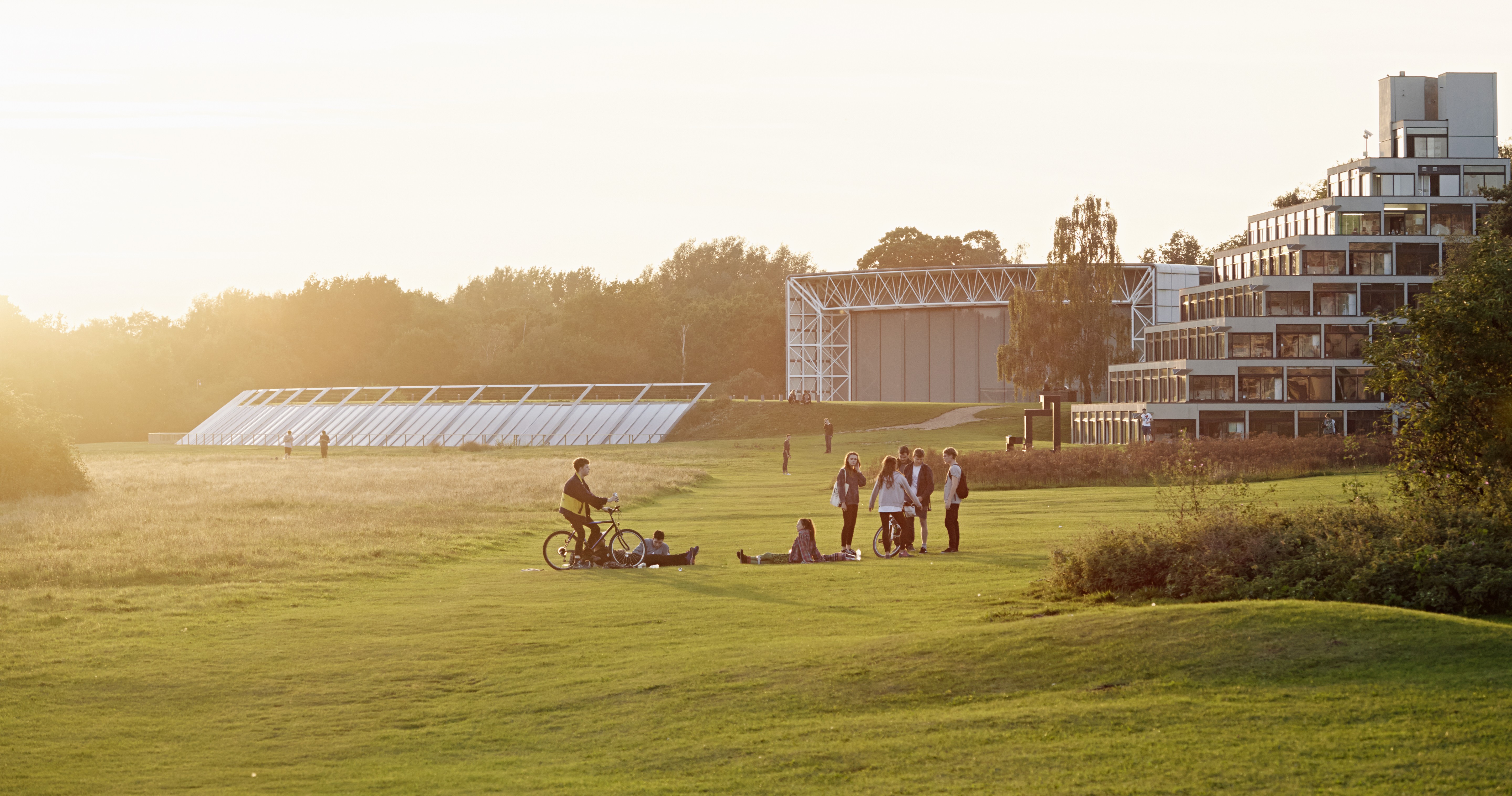
Key details
Visiting UEA is the best way to find out if you could imagine yourself studying and living on our beautiful campus. Explore our virtual and in person events now.
Choose to study our top ranked BSc Occupational Therapy course and you’ll be taking the first step towards an exciting and rewarding profession that focuses on developing extraordinary partnerships with people and making lasting, positive changes to their lives by empowering them to reach their maximum potential.
By entering onto our three-year course, you’ll develop the skills and attributes required to help people address their difficulties. As a qualified Occupational Therapist, you’ll work in close collaboration with other health and social care professionals, which is why our programme has a strong inter-professional focus, embodying the principles that facilitate effective teamwork. You’ll develop a professional identity of your own while gaining a greater awareness of the roles and responsibilities of all partners in health and social care.
Throughout our Occupational Therapy degree, you’ll share modules with physiotherapy students. You’ll take part in small teaching groups, allowing you to get involved with a close-knit student body and supportive learning culture. Hands-on practice is vital, so you’ll have practice placement experience in every year of your course with us. We ensure you get a varied experience with a mixture of both physical and mental health placements.
As well as giving you a solid and varied academic grounding, our programme will provide you with early patient contact and access to superb facilities, including our anatomy room, simulation laboratories and assistive technology suite. These will help you develop the practical skills which will prove vital to making your career a success.
You’ll graduate with all of the skills and knowledge necessary to register with the Health and Care Professions Council as an occupational therapist. After this, you’ll embark on a challenging and rewarding career helping people from a wide range of backgrounds with their autonomy, functionality, and enjoyment of life.
)
Find out more about studying Health Therapies at UEA, and browse our other courses.
Find out moreYour sixth placement will be a professional development placement within an area guided by the rest of your placement profile, in a location which you’ll choose and organise (with approval from the Personal Advisor / Course Director). You can choose where you’d like to complete the placement, based on your previous practice experience. You’ll have the option to undertake your placement overseas, broadening your understanding of occupational therapy within a different country and culture. This is subject to government health advice at the time these placements take place.
Our programme is approved by the Health and Care Professionals Council (HCPC) and accredited by the Royal College of Occupational Therapists. Following your graduation, you’ll be eligible to register as an Occupational Therapist with the HCPC which qualifies you to work in the UK and overseas, although in some countries like the USA and Canada, you may have to sit a further exam.
Examples of careers that you could enter include:
Discover more on our Careers webpages.
Once you graduate, you’ll be eligible to register with the Health and Care Professions Council and join the Royal College of Occupational Therapists as a professional member.
Throughout your career, you’ll have the chance to make a real difference, giving individuals a renewed sense of purpose, opening new horizons, and changing the way they feel about the future.
You’ll enjoy a broad range of career opportunities, and the skills you’ll develop could lend themselves to new emerging roles too, such as working with asylum seekers or refugees, the police or the fire services.
Discover more about the wide variety of career opportunities for occupational therapists by visiting the Royal College of Occupational Therapists site, and our own Careers webpages.
You’ll develop Occupational Therapy knowledge and skills in a structured way, with a curriculum made up of carefully planned compulsory modules. All modules are year-long and consist of a mix of profession-specific and interdisciplinary learning, varying in weight from 20 to 60 credits.
In the first year, you’ll engage with core occupational science and occupational therapy theory and practice. You’ll start to explore concepts of occupational science, and how occupation can be used as a therapeutic intervention.
You’ll study human sciences, covering anatomy, which is supported by our dissection labs, physiology, psychology and sociology. You’ll be introduced to basic group-work skills and have a variety of opportunities to engage in creative occupations. You’ll undertake two practice placements to introduce you to the workplace, and to enable you to start establishing links between theory and practice.
You’ll be introduced to key research concepts to support your development as an evidence-based practitioner and start to prepare you for writing your dissertation in your final year.
You’ll also work together with students from other disciplines to start developing professionalism and employability skills.
Whilst the University will make every effort to offer the modules listed, changes may sometimes be made arising from the annual monitoring, review and update of modules. Where this activity leads to significant (but not minor) changes to programmes and their constituent modules, the University will endeavour to consult with students and others. It is also possible that the University may not be able to offer a module for reasons outside of its control, such as the illness of a member of staff. In some cases optional modules can have limited places available and so you may be asked to make additional module choices in the event you do not gain a place on your first choice. Where this is the case, the University will inform students.
Throughout the three years, you’ll engage in a variety of different learning experiences including lectures, seminars, online sessions, and experiential group activities. Introductory sessions at the start of each academic year will help you transition between the different academic levels. In addition, you’ll complete self-directed learning to prepare for upcoming sessions. You’ll be encouraged to engage in reflective practice to consider how you can prepare for any future assignments.
The course will give you an excellent balance of independent critical thinking and study skills, helping you grow into a self-motivated learner, an expert researcher, and an analytical thinker. You’ll develop confidence in your written work through engagement with evidence-based practice. And throughout your degree, you’ll be given guidance on your work and provided with constructive feedback to support your development.
Academic support is extremely important to us. We acknowledge this is a challenging course and want to support you throughout your journey. You’ll be allocated a member of the occupational therapy faculty as your adviser, who’ll support you throughout your three years.
Our teaching methods at UEA are focused on taking a student-centred approach. You’ll be taught through a blend of lectures, seminars, workshops and student-led learning for the first year of study.
We’ll assess your professional reasoning and analytical skills as they develop in your practice placements. You’ll also create a professional portfolio to capture your development throughout the programme. You’ll continue to build on this portfolio throughout your professional career.
You’ll receive feedback throughout, so you can reflect on your practice and learning, helping you identify your strengths as well as any areas you may need to work on. Your assessments have been designed to enable you to develop the core skills required for practice.
You’ll have a mixture of essays, multiple choice questions, group presentations, oral presentations and two practice placements.
This course is highly interactive, and you’ll have opportunities throughout to develop your skills through hands-on experience.
In your second year of study, you’ll get to grips with what it means to practice occupational therapy. You’ll examine the biological, psychological, sociological and spiritual perspectives of health. And you’ll study specific health conditions in order to understand how occupational therapy relates across diverse areas of practice. You’ll continue to develop the key research and professionalism skills required of a healthcare professional and will take part in two further placements. Year two is all about furthering your practical skills.
Whilst the University will make every effort to offer the modules listed, changes may sometimes be made arising from the annual monitoring, review and update of modules. Where this activity leads to significant (but not minor) changes to programmes and their constituent modules, the University will endeavour to consult with students and others. It is also possible that the University may not be able to offer a module for reasons outside of its control, such as the illness of a member of staff. In some cases optional modules can have limited places available and so you may be asked to make additional module choices in the event you do not gain a place on your first choice. Where this is the case, the University will inform students.
In your second year, you’ll have the opportunity to explore case studies from across the life span. This will provide you with an opportunity to work through the occupational therapy process and practice your problem-solving skills. You’ll also develop practical skills like supporting and running therapy groups in a supportive environment to prepare you for independent practice.
You’ll have a mixture of oral presentations, written work and short answer questions for your evidence-based practice module, alongside two practice placements.
In your final year, you’ll continue to develop your knowledge and skills, exploring Occupational Therapy theory and practice using creative media. You’ll study a variety of contemporary health topics, as well as the legislation and policies that drive the health and social care agenda. You’ll also explore new areas of occupational therapy and build your confidence in working in non-traditional areas of practice.
Throughout the year, you’ll become increasingly independent and responsible for your own learning, in preparation for your transition to qualified professional life. You’ll complete a further two practice placements, one of which will allow you to specialise in an area of your choice.
Whilst the University will make every effort to offer the modules listed, changes may sometimes be made arising from the annual monitoring, review and update of modules. Where this activity leads to significant (but not minor) changes to programmes and their constituent modules, the University will endeavour to consult with students and others. It is also possible that the University may not be able to offer a module for reasons outside of its control, such as the illness of a member of staff. In some cases optional modules can have limited places available and so you may be asked to make additional module choices in the event you do not gain a place on your first choice. Where this is the case, the University will inform students.
In your final year, you’ll explore specialist areas of occupational therapy and prepare for your transition to becoming an autonomous professional. As an Occupational Therapist, you need to be able to problem-solve and operate autonomously, and our course is designed to ensure you can do just that.
You’ll spend a third of your final year on practice placements where you’ll learn from occupational therapists in practice.
You’ll have an oral presentation, a business plan, a professional interview and development plan and a critical literature review, alongside two practice placements.
UK and International fee-paying students. Choose UK or International above to see relevant information. The entry point is in September each year.
We welcome and value a wide range of qualifications, and we recognise that some students might take a mixture of different qualifications. We have listed typical examples that we accept for entry.
You should hold or be working towards the specified English and Mathematics requirements and one of the examples of typical entry qualifications listed below. If your qualifications aren’t listed, or if you are taking a combination of qualifications that isn’t specified, please contact Admissions.
All applicants must hold or be working towards GCSEs in English Language and Mathematics at minimum grade C or grade 4.
We accept a wide range of English Language qualifications, please see our English Language equivalencies page.
We require 5 GCSEs to be complete at grade C or 4, including English Language, Mathematics, and at least one Science subject.
If you hold or are working towards Mathematics and English Language GCSEs but do not hold 5 GCSEs/a science GCSE, please contact Admissions.
UEA are committed to ensuring that Higher Education is accessible to all, regardless of their background or experiences. One of the ways we do this is through our contextual admissions schemes(opens in a new window).
BBB.
Contextual offer: BCC.
Not accepted: Critical Thinking and General Studies.
Level 3 Extended Diploma: DDM in Health, Care or Science.
Contextual offer: DMM in Health, Care or Science.
See BTEC / OCR Cambridge Technical Level 3 section below for further information on accepted subjects.
BTEC in Public Services, Uniformed Services and Business Administration are all excluded from our BTEC offers.
Pass Access to HE Diploma with Merit in 45 credits at Level 3 in a Health, Care or Science subject.
Contextual: Pass Access to HE Diploma with Merit in 30 credits at Level 3 and Pass in 15 credits at Level 3 in a Health, Care or Science subject.
Obtain an overall Merit. We accept: Health, Healthcare Science, Science.
Offers will be made to applicants after completion of successful interviews and will be subject to a satisfactory occupational health check, including evidence of appropriate immunisations. Failure to meet the placement vaccination policy may prevent you from joining the course or may lead to your withdrawal from the course in the future. Offers are also subject to an enhanced Disclosure and Barring Service (DBS)(opens in a new window) check. Future employment may be subject to these conditions. Where applicable, an Overseas Police Check may be required. We will let you know what you need to do (and when) to meet these conditions if you are successful in gaining an offer.
If you have previously studied at degree level in a health based subject, we will want to see that you have passed all of the study that you have undertaken. We’ll be unable to consider you for this course if you’ve obtained an academic fail from a previous health based degree programme, including where an exit award has been achieved.
The strongest applicants will be invited to interview. Please note that meeting (or being predicted to meet) the minimum academic entry requirements will not guarantee that you will be selected for interview.
Interview invitations will be sent by email. Please keep a close eye on all emails from UEA after you submit your UCAS application. For more information on the application process and what to expect at each step, take a look at our handy Applying to HSC infographic(opens in a new window), which explains the application journey from start to finish.
Placement allocation primarily takes place across a variety of settings, which may include hospitals, community services, general practice, social services, and voluntary or private organisations. These placements are located throughout the counties of Norfolk, Suffolk, Essex, and Cambridgeshire.
We welcome applications from students who have already taken or intend to take a gap year. We believe that a year between school and university can be of substantial benefit. You are advised to indicate your reason for wishing to defer entry on your UCAS application.
Our Admissions Policy applies to the admissions of all undergraduate applicants.
Once enrolled onto a course at UEA, your progression and continuation (which may include eligibility for study abroad, overseas experience, placement or year in industry opportunities) is contingent on meeting the assessment requirements which are relevant to the course on which you are enrolled.
We would prefer you to be able to demonstrate evidence of recent academic study within 5 years of the start of the course. If your last qualification will have been completed more than 5 years ago by the time the course starts, please contact Admissions.
Applicants for this course need to be aged 18 or over by 31 December 2026. This is owing to the integrated nature of placements within the first year of the course and safeguarding implications. In view of this, applicants who will not be 18 years old or over by this date, should consider applying for deferred entry.
UK and International fee-paying students. Choose UK or International above to see relevant information. The entry point is in September each year.
We welcome and value a wide range of qualifications, and we recognise that some students might take a mixture of different qualifications. We have listed typical examples that we accept for entry.
You should hold or be working towards the specified English and Mathematics requirements and one of the examples of typical entry qualifications listed below. If your qualifications aren’t listed, or if you are taking a combination of qualifications that isn’t specified, please contact Admissions.
All applicants must hold or be working towards GCSEs in English Language and Mathematics at minimum grade C or grade 4.
We accept a wide range of English Language qualifications, please see our English Language equivalencies page.
We require 5 GCSEs to be complete at grade C or 4, including English Language, Mathematics, and at least one Science subject.
If you hold or are working towards Mathematics and English Language GCSEs but do not hold 5 GCSEs/a science GCSE, please contact Admissions.
BBB.
Not accepted: Critical Thinking and General Studies.
31 points overall.
We accept many international qualifications for entry to this course. For specific details about your country, view our information for International Students(opens in a new window).
If you do not meet the academic and/or English language requirements for direct entry our partner, UEA International Study Centre(opens in a new window) offers progression on to this undergraduate degree upon successful completion of a preparation programme.
Applications from students whose first language is not English are welcome. We require evidence of proficiency in English (including writing, speaking, listening and reading):
IELTS: 7.0 overall (minimum 6.5 in all components)
We also accept a number of other English language tests. Review our English Language Equivalencies(opens in a new window) for a list of example qualifications that we may accept to meet this requirement.
Test dates should be within two years of the course start date.
If you do not yet meet the English language requirements for this course, UEA International Study Centre offer a variety of English language programmes which are designed to help you develop the English skills necessary for successful undergraduate study:
Offers will be made to applicants after completion of successful interviews and will be subject to a satisfactory occupational health check, including evidence of appropriate immunisations. Failure to meet the placement vaccination policy may prevent you from joining the course or may lead to your withdrawal from the course in the future. Offers are also subject to an enhanced Disclosure and Barring Service (DBS)(opens in a new window) check. Future employment may be subject to these conditions. Where applicable, an Overseas Police Check may be required. We will let you know what you need to do (and when) to meet these conditions if you are successful in gaining an offer.
If you have previously studied at degree level in a health based subject, we will want to see that you have passed all of the study that you have undertaken. We’ll be unable to consider you for this course if you’ve obtained an academic fail from a previous health based degree programme, including where an exit award has been achieved.
The strongest applicants will be invited to interview. Please note that meeting (or being predicted to meet) the minimum academic entry requirements will not guarantee that you will be selected for interview.
Interview invitations will be sent by email. Please keep a close eye on all emails from UEA after you submit your UCAS application. For more information on the application process and what to expect at each step, take a look at our handy Applying to HSC infographic(opens in a new window), which explains the application journey from start to finish.
Placement allocation primarily takes place across a variety of settings, which may include hospitals, community services, general practice, social services, and voluntary or private organisations. These placements are located throughout the counties of Norfolk, Suffolk, Essex, and Cambridgeshire.
We welcome applications from students who have already taken or intend to take a gap year. We believe that a year between school and university can be of substantial benefit. You are advised to indicate your reason for wishing to defer entry on your UCAS application.
Our Admissions Policy applies to the admissions of all undergraduate applicants.
Once enrolled onto a course at UEA, your progression and continuation (which may include eligibility for study abroad, overseas experience, placement or year in industry opportunities) is contingent on meeting the assessment requirements which are relevant to the course on which you are enrolled.
We would prefer you to be able to demonstrate evidence of recent academic study within 5 years of the start of the course. If your last qualification will have been completed more than 5 years ago by the time the course starts, please contact Admissions.
Applicants for this course need to be aged 18 or over by 31 December 2026. This is owing to the integrated nature of placements within the first year of the course and safeguarding implications. In view of this, applicants who will not be 18 years old or over by this date, should consider applying for deferred entry.
Tuition Fees
View our information for Tuition Fees(opens in a new window).
Scholarships and Bursaries
We are committed to ensuring that costs do not act as a barrier to those aspiring to come to a world leading university and have developed a funding package to reward those with excellent qualifications and assist those from lower income backgrounds. View our range of Scholarships(opens in a new window) for eligibility, details of how to apply and closing dates.
You can find information regarding additional costs associated on our Fees and finance webpages.
UCAS Hub is a secure online application system that allows you to apply for full-time undergraduate courses at universities and colleges in the United Kingdom.
Your application does not have to be completed all at once. Register or sign in to UCAS(opens in a new window) to get started.
Once you submit your completed application, UCAS will process it and send it to your chosen universities and colleges.
The Institution code for the University of East Anglia is E14.
View our guide to applying through UCAS for useful tips, key dates and further information:
Occupational Therapy starting September 2026 for 3 years
)