
)
Biological Sciences at UEA
Find out more about studying Biological Sciences at UEA, and browse our other courses.
Find out moreYour story starts here
Book your Open Day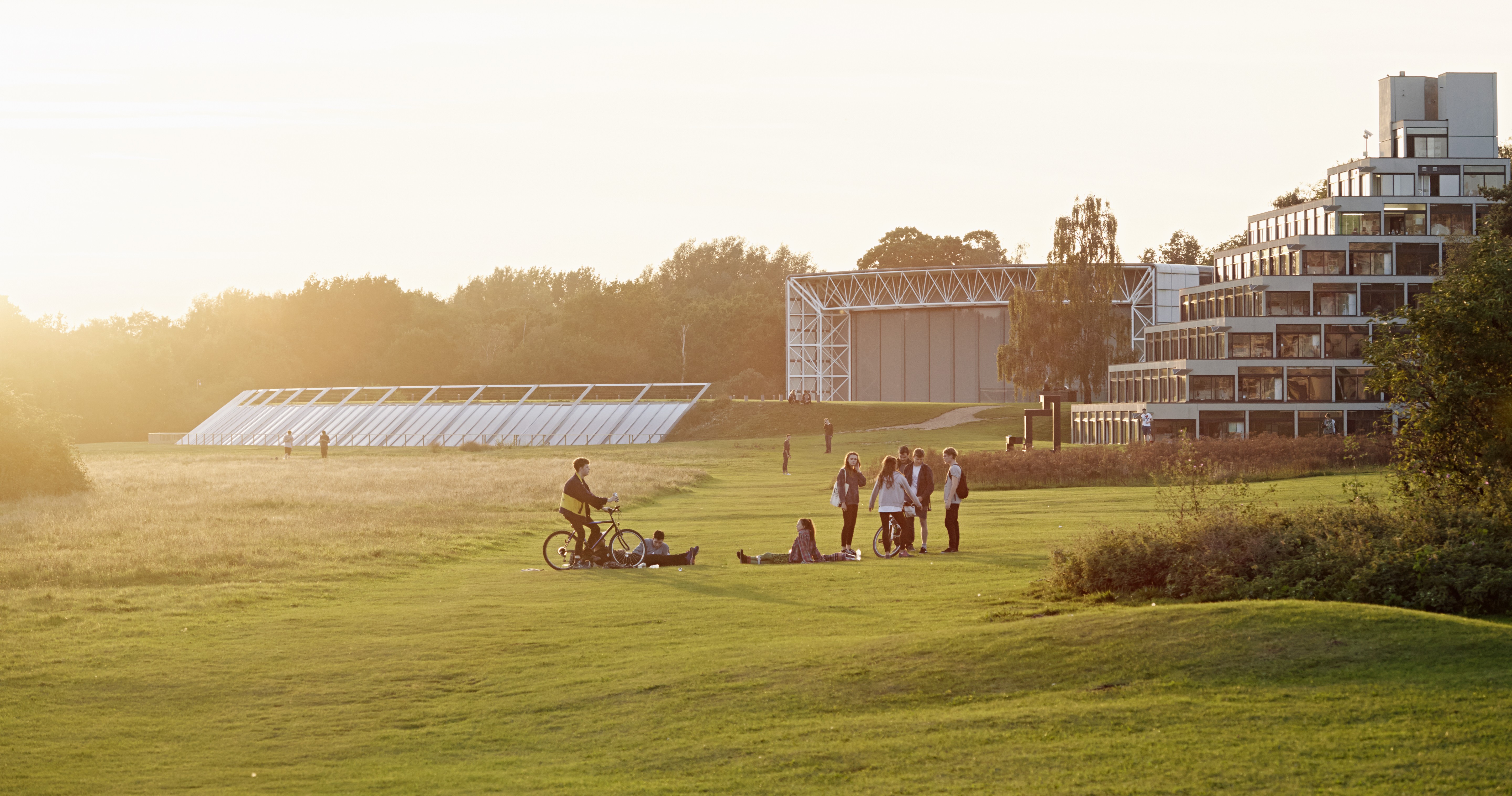
Key details
Visiting UEA is the best way to find out if you could imagine yourself studying and living on our beautiful campus. Explore our virtual and in person events now.
Of graduates go on to work and/or study within 15 months after the course
Graduate Outcomes Survey 2021-23Ready to turn your passion for the natural world into a purpose-driven career? With UEA’s Ecology and Conservation degree, you’ll study how animals, plants, and ecosystems interact and evolve, and learn how science drives global conservation efforts. Whether you dream of protecting endangered species, restoring habitats, or shaping environmental policy, this is your springboard to a future where you can make a real difference.
At UEA, you’ll be taught by world-leading experts from our Schools of Biological and Environmental Sciences. Our unique approach to ecology and conservation will see you learning in the classroom, in our state-of-the-art labs, and in the field from your first year through to your final year research project.
UEA has a vibrant campus to explore with thousands of species thriving in and around the lake, woods, reedbeds and meadows. You’ll have the exciting opportunity to experience conservation work firsthand and develop biodiversity survey and identification skills. Norfolk is a dream location for aspiring ecologists – with vast beaches, rolling sand dunes, ancient woodlands, and hundreds of nature reserves right on your doorstep. It’s the perfect natural classroom to explore, observe and put your learning into action.
This course equips you with the full toolkit for a career in ecology and conservation – from fieldwork techniques to lab analysis, computing, and scientific writing. You’ll learn how to investigate pressing ecological challenges and design innovative solutions to protect our planet's future.
At the end of this BSc Ecology and Conservation course, you’ll have the knowledge and research skills needed to prepare you for a career in industry, research or academia. Your wealth of experience in laboratory and fieldwork will make you stand out to potential future employers, as will the connections you make during your time at UEA.
)
Find out more about studying Biological Sciences at UEA, and browse our other courses.
Find out moreExamples of careers that you could enter include:
Discover more on our Careers webpages.
You’ll graduate as a skilled ecologist ready to take advantage of East Anglia’s wealth of varied habitats, or range further afield. Either way, you’ll be able to use what you’ve learned at UEA to make a real difference.
You could go on to a career in many different areas – from ecological research, agriculture and horticulture to environmental management, consultancy and conservation. You might also consider education or science communication and engagement. Many of our graduates also progress to postgraduate study.
The first year of your Ecology and Conservation degree is all about developing your field skills and theoretical knowledge to give you a solid grounding in the fundamentals of ecology. You’ll undertake a range of modules in which you’ll explore biodiversity, taxonomy, and evolution, enabling you to explore the processes that have driven the diversity of life on Earth.
Alongside this, you’ll consider the challenges facing ecologists today, devising solutions to some of these problems from an interdisciplinary perspective by studying alongside students from the School of Environmental Sciences. Finally, you’ll take part in several field trips exploring some of the diverse habitats and landscapes across East Anglia.
Whilst the University will make every effort to offer the modules listed, changes may sometimes be made arising from the annual monitoring, review and update of modules. Where this activity leads to significant (but not minor) changes to programmes and their constituent modules, the University will endeavour to consult with students and others. It is also possible that the University may not be able to offer a module for reasons outside of its control, such as the illness of a member of staff. In some cases optional modules can have limited places available and so you may be asked to make additional module choices in the event you do not gain a place on your first choice. Where this is the case, the University will inform students.
All our teaching in the School of Biological Sciences is research led. This means you’ll be taught by passionate and experienced academic staff who bring the latest scientific discoveries and innovations directly into your learning experience, keeping your studies current and impactful.
You’ll learn through field trips, lectures, seminars, and workshops geared towards helping you understand the theory and concepts behind evolution, behaviour, ecological services, processes and conservation. You’ll spend time in the laboratory developing techniques to explore ecology, from microbes and parasites to model organisms. You'll also learn through fieldwork where you’ll perfect practical field skills and survey techniques. You'll meet and learn from working ecologists from key partner organisations to develop practical conservation skills to complement your academic studies.
During this course, you’ll develop your skills and knowledge through a range of activities, from field-based surveys through lab practicals to lectures. You’ll be assessed on your learning and progress on this course through a range of methods which may include the presentation of your own taxonomy collection, creating social media articles, group presentations, or writing executive reports for clients, as well as the more formal course tests, exams and assessed practical work. Ecology with Conservation has a strong emphasis on coursework and practical reporting, preparing you for the workplace after you graduate.
In the second year of your degree, you’ll develop your knowledge with modules that explore population and community ecology, and the management of populations including the role of citizen science and Big Data. You'll also go on a two-week field course exploring a range of habitats and refining your survey skills and analytical techniques.
You’ll choose three modules to complement all of these and might find yourself exploring parasite and pathogen ecology, undertaking a further field course in the tropics, or exploring environmental policy and macroecology.
Whilst the University will make every effort to offer the modules listed, changes may sometimes be made arising from the annual monitoring, review and update of modules. Where this activity leads to significant (but not minor) changes to programmes and their constituent modules, the University will endeavour to consult with students and others. It is also possible that the University may not be able to offer a module for reasons outside of its control, such as the illness of a member of staff. In some cases optional modules can have limited places available and so you may be asked to make additional module choices in the event you do not gain a place on your first choice. Where this is the case, the University will inform students.
You’ll continue learning through a combination of classroom, laboratory and field research, with a greater focus on independent and student-led research. You’ll have the opportunity to learn from leading ecologists from both within UEA and our partner organisations. You’ll also take part in residential field courses where you can fully immerse yourself in ecology, dedicating each day to hands-on fieldwork, skill-building, and exploring key ecological concepts. These field courses are a vital part of your training, and being assessed through project work provides valuable, real-world experience that directly enhances your employability.
You’ll continue to be assessed using a variety of methods, from more traditional exams and coursework to projects which more closely mirror a workplace environment. Assessment methods will continue to be split between lecture, laboratory, and field-based work. The range of modules offered covers a variety of assessment modes from academic journal-style reports to journalistic style essays and IT projects, statistics assignments and science communication.
In the final year of your studies, you’ll undertake an independent ecological research project. Working with one of the researchers from within the school or from one of our affiliated research institutions, this project is your opportunity to explore your own areas of interest and answer a research question that you may have developed during your studies. Your project can be field- or lab-based and take place in the UK or overseas.
In addition to the research project, you’ll choose to study a range of modules that’ll help you to specialise in the areas of ecology that suit your own interests, be they the evolution of social behaviour, marine ecology, biodiversity conservation, or environmental politics.
By the time you finish this final year, you’ll have had hands-on opportunities to explore a range of temperate and tropical habitats. You’ll have spent time exploring organisms and their anatomy, considered the role of evolution in driving the diversity of life, and developed many transferable skills, from report-writing to science communication. You’ll graduate with an excellent grounding in Ecology and Conservation, ready to apply your skills to this increasingly important field of science.
Whilst the University will make every effort to offer the modules listed, changes may sometimes be made arising from the annual monitoring, review and update of modules. Where this activity leads to significant (but not minor) changes to programmes and their constituent modules, the University will endeavour to consult with students and others. It is also possible that the University may not be able to offer a module for reasons outside of its control, such as the illness of a member of staff. In some cases optional modules can have limited places available and so you may be asked to make additional module choices in the event you do not gain a place on your first choice. Where this is the case, the University will inform students.
While you continue your classroom, laboratory, and field-based modules, you’ll conduct your own unique research projects in your third year. You’ll also have the chance to attend regular seminars and workshops exploring the latest research in ecology. These are often conducted by world-leading scientists and are organised by the Centre for Ecology, Evolution and Conservation (CEEC) – one of the largest groups of ecologists and evolutionary biologists in Europe. They regularly feature scientists from UEA, as well as our affiliated partners like the British Trust for Ornithology (BTO) and the Centre for Environment, Fisheries and Aquaculture Science (CEFAS). You can work with the broader CEEC community in developing your third-year research project.
You'll undergo assessment through diverse methods, ranging from conventional exams and coursework to projects designed to simulate real-world workplace scenarios. Assessment strategies will remain diversified across lecture, laboratory, and field-based activities. In addition, you’ll be assessed on your completion of a more substantive independent research project, which has a proposal, presentation and a dissertation element, as well as continuous learning through interactions with your supervisor.
UK and International fee-paying students. Choose UK or International above to see relevant information. The entry point is in September each year.
We welcome and value a wide range of qualifications, and we recognise that some students might take a mixture of different qualifications. We have listed typical examples that we accept for entry.
You should hold or be working towards the specified English and Mathematics requirements and one of the examples of typical entry qualifications listed below. If your qualifications aren’t listed, or if you are taking a combination of qualifications that isn’t specified, please contact Admissions.
All applicants must hold or be working towards GCSEs in English Language and Mathematics at minimum grade C or grade 4.
We accept a wide range of English Language qualifications, please see our English Language equivalencies(opens in a new window) page.
UEA are committed to ensuring that Higher Education is accessible to all, regardless of their background or experiences. One of the ways we do this is through our contextual admissions schemes(opens in a new window).
BBB including Biology, Human Biology, Geography or Environmental Sciences
Contextual offer: BCC including Biology, Human Biology, Geography or Environmental Sciences
Where applicable Science A Levels awarded by an English Exam board require a pass in the practical element. Not accepted: Critical Thinking and General Studies.
Level 3 Extended Diploma: DDM in Applied Science (Medical Science/Biomedical Science), Forensic and Criminal Investigation, Countryside Management or Animal Management OR DDM plus B in A-Level Biology or Human Biology, Geography or Environmental Science .
Contextual offer: DMM in Applied Science (Medical Science/Biomedical Science), Forensic and Criminal Investigation, Countryside Management or Animal Management OR DMM plus B in A-Level Biology or Human Biology, Geography or Environmental Science .
For BTEC Forensic and Criminal Investigation applicants MUST be studying one of the following modules: Physiology and Human Body Systems, Environmental Forensics, Forensic Genetics or Microbiology and Microbiological Techniques.
BTEC in Public Services, Uniformed Services and Business Administration are all excluded from our BTEC offers.
Pass the Access to HE Diploma with Merit in 45 credits at Level 3 including 12 credits in Biology, Geography or Environmental Science.
Contextual: Pass the Access to HE Diploma with Merit in 30 credits at Level 3 and pass in 15 credits at Level 3 including 12 credits in Biology, Geography or Environmental Science at Merit.
Obtain an overall Merit. Accepted subject: Science.
If you do not meet the academic requirements for direct entry, you may be interested in one of our Foundation Year programmes such as - BSc Biological Sciences with a Foundation Year.
31 points overall with HL 5 in Biology, Geography or Environmental Sciences
2 subjects at H2 and 4 subjects at H3 including Biology, Geography or Environmental Sciences,
AABBB including A in Biology, Geography or Environmental Sciences.
CCC including Biology, Geography or Environmental Sciences. A combination of Advanced Highers and Highers may be acceptable.
We welcome applications from students who have already taken or intend to take a gap year. We believe that a year between school and university can be of substantial benefit. You are advised to indicate your reason for wishing to defer entry on your UCAS application.
Our Admissions Policy applies to the admissions of all undergraduate applicants.
Once enrolled onto a course at UEA, your progression and continuation (which may include eligibility for study abroad, overseas experience, placement, or year in industry opportunities) is contingent on meeting the assessment requirements which are relevant to the course on which you are enrolled.
We would prefer you to be able to demonstrate evidence of recent academic study within 5 years of the start of the course. If your last qualification will have been completed more than 5 years ago by the time the course starts, please contact Admissions.
UK and International fee-paying students. Choose UK or International above to see relevant information. The entry point is in September each year.
We welcome and value a wide range of qualifications, and we recognise that some students might take a mixture of different qualifications. We have listed typical examples that we accept for entry.
You should hold or be working towards the specified English and Mathematics requirements and one of the examples of typical entry qualifications listed below. If your qualifications aren’t listed, or if you are taking a combination of qualifications that isn’t specified, please contact Admissions.
All applicants must hold or be working towards GCSEs in English Language and Mathematics at minimum grade C or grade 4.
We accept a wide range of English Language qualifications, please see our English Language equivalencies(opens in a new window) page.
BBB including Biology, Human Biology, Geography or Environmental Sciences
Where applicable Science A Levels awarded by an English Exam board require a pass in the practical element. Not accepted: Critical Thinking and General Studies.
31 points overall with HL 5 in Biology, Geography or Environmental Sciences
If you do not meet the academic and/or English language requirements for direct entry our partner, UEA International Study Centre(opens in a new window) offers progression on to this undergraduate degree upon successful completion of a preparation programme. Depending on your interests, and your qualifications you can take a variety of routes to this degree.
Applications from students whose first language is not English are welcome. We require evidence of proficiency in English (including writing, speaking, listening and reading):
IELTS: 6.0 overall (minimum 5.5 in all components)
We also accept a number of other English language tests. Review our English Language Equivalencies(opens in a new window) for a list of example qualifications that we may accept to meet this requirement.
Test dates should be within two years of the course start date.
If you do not yet meet the English language requirements for this course, UEA International Study Centre(opens in a new window) offer a variety of English language programmes which are designed to help you develop the English skills necessary for successful undergraduate study.
We welcome applications from students who have already taken or intend to take a gap year. We believe that a year between school and university can be of substantial benefit. You are advised to indicate your reason for wishing to defer entry on your UCAS application.
Our Admissions Policy applies to the admissions of all undergraduate applicants.
Once enrolled onto a course at UEA, your progression and continuation (which may include eligibility for study abroad, overseas experience, placement, or year in industry opportunities) is contingent on meeting the assessment requirements which are relevant to the course on which you are enrolled.
We would prefer you to be able to demonstrate evidence of recent academic study within 5 years of the start of the course. If your last qualification will have been completed more than 5 years ago by the time the course starts, please contact Admissions.
Tuition Fees
View our information for Tuition Fees(opens in a new window).
Scholarships and Bursaries
We are committed to ensuring that costs do not act as a barrier to those aspiring to come to a world leading university and have developed a funding package to reward those with excellent qualifications and assist those from lower income backgrounds. View our range of Scholarships(opens in a new window) for eligibility, details of how to apply and closing dates.
You’ll normally be expected to pay 50% towards the cost of any optional field trips selected from the range of residential field courses within the Schools of Biological Science or Environmental Sciences. All ecology students are expected to have suitable field clothes including walking boots and waterproofs.
Please see Additional Course Fees for details of other course-related costs.
UCAS Hub is a secure online application system that allows you to apply for full-time undergraduate courses at universities and colleges in the United Kingdom.
Your application does not have to be completed all at once. Register or sign in to UCAS to get started.
Once you submit your completed application, UCAS will process it and send it to your chosen universities and colleges.
The Institution code for the University of East Anglia is E14.
View our guide to applying through UCAS for useful tips, key dates and further information:
Ecology and Conservation starting September 2026 for 3 years
)